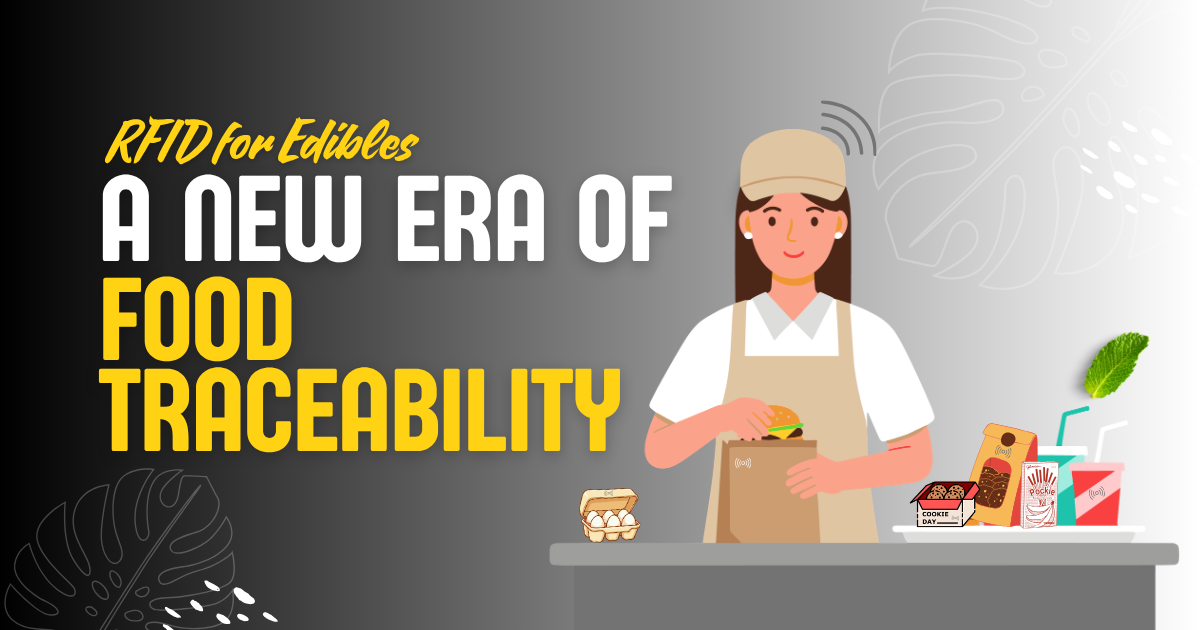
Food supply chains are becoming increasingly complex, involving multiple stages such as production, packaging, transportation, storage, and retail distribution. As consumers demand greater transparency and regulatory requirements continue to evolve, the need for advanced product identification and traceability technologies has never been greater.
Radio Frequency Identification (RFID) is playing a critical role in enabling digital traceability across the food supply chain. While traditional RFID tags and labels are already widely used for packaging and pallet-level tracking, emerging innovations such as edible RFID technology are opening new possibilities for product-level transparency and authentication.
Understanding RFID Technology in food traceability
RFID components designed using food-safe and ingestible materials that can be applied directly to food products. Unlike conventional tags attached to packaging, edible RFID elements are integrated into the product itself, allowing each item to carry a unique digital identity.
These systems are being researched to ensure that RFID materials remain safe for consumption, biodegradable, and compliant with food safety standards. When scanned by compatible RFID readers, the tag transmits product information such as origin, batch number, processing details, and distribution history.
This technology has the potential to transform how food authenticity and traceability are verified throughout the supply chain.
Why Food Transparency Matters
Consumers today expect more information about the food they purchase. They want to know:
- Where the product originated
- How it was processed
- Whether it meets safety and quality standards
- How fresh the product is
Traditional labeling methods often rely on printed information that can be altered or difficult to verify. RFID-based identification creates a digitally verifiable layer of information, enabling automated tracking and authentication.
With RFID-enabled transparency, stakeholders across the food ecosystem—from producers to retailers—can access accurate, real-time product data.
Key Benefits of RFID in Food Traceability
1. Enhanced Product Authentication
RFID-enabled identification helps verify product authenticity, reducing the risk of food fraud and counterfeiting.
2. Real-Time Supply Chain Visibility
RFID allows automated tracking of food items through warehouses, distribution centers, and retail locations without requiring manual scanning.
3. Faster Recall Management
In the event of contamination or quality issues, RFID label help identify affected batches quickly, enabling targeted recalls and reducing waste.
4. Improved Inventory Management
RFID tags allow retailers and distributors to monitor stock levels and product movement efficiently.
The Role of RFID Tags and Labels in the Food Industry
While edible RFID technology is still evolving, RFID tags and labels already play a vital role in food supply chain digitization. RFID-enabled labels attached to packaging, containers, and pallets allow businesses to maintain reliable tracking throughout logistics and distribution processes.
Manufacturers like Omnia Technologies provide durable RFID tags and labels designed for supply chain environments, enabling automated identification and data capture across food production and distribution networks.
These solutions help companies implement end-to-end product visibility without disrupting existing packaging or operational workflows.
The Future of Smart Food Identification
As research into edible electronics continues to progress, edible RFID may eventually enable item-level identification directly on food products. Combined with existing RFID labeling technologies, this could create a comprehensive traceability framework covering both packaging and product-level identification.
Such advancements will support:
- Greater consumer trust
- Stronger food safety compliance
- More efficient supply chain operations
RFID technology will continue to play a central role in building transparent, data-driven food ecosystems.
Conclusion
Edible RFID represents a promising step toward deeper food transparency and product authentication. While the technology continues to develop, RFID tags and labels are already transforming how food products are tracked and verified across the global supply chain.
By enabling reliable identification, automated tracking, and improved data visibility, RFID labels are helping the food industry move toward a future where transparency, safety, and traceability are seamlessly integrated into every product journey.
To learn more about RFID tags and labeling solutions for supply chain and product traceability:
🌐 Visit: www.omniatags.com
📩 Contact: sales@omniatags.com