Category: Uncategorized

  • Delivering Quality RFID Tags: Why Omniatags Stands Apart

    Delivering Quality RFID Tags: Why Omniatags Stands Apart

    In todayโ€™s fast-moving industriesโ€”whether it’s supply chain, manufacturing, livestock management, or waste trackingโ€”the reliability of an RFID system depends largely on one critical component: the tag itself. At Omniatags, we understand that every project is unique, and so are its tagging challenges. That is why we focus on providing high-quality RFID tags that deliver consistent, real-world performance tailored to the application they serve.

    Why RFID Tag Quality Matters

    The true strength of an RFID solution is measured in the fieldโ€”where tags face heat, pressure, moisture, rough handling, chemicals, or long-term outdoor exposure. A low-quality or mismatched tag can lead to:
    • Poor read range
    • Data inaccuracy
    • Operational downtime
    • Increased replacement cost
    • Failed deployments
    This is why Omniatags prioritizes quality above everything else. Each tag is manufactured to international standards and designed to perform in demanding environments.

    High-Quality RFID Tags We Provide

    Omniatags offers a comprehensive portfolio of RFID tags built for accuracy, durability, and long-term performance. Under every application category, we provide multiple tag optionsโ€”because no two customers or operational environments are the same.

    1. Animal Identification Tags (ICAR-Approved)

    • High-grade TPU material for flexibility and durability
    • Strong retention rate
    • UHF & LF options
    • Suitable for cattle, sheep, goat, dog
    • Global compliance for livestock traceability 

    2. Tire RFID Tags

    • Patch and spring RFID tire tags
    • Heat, pressure & abrasion-resistant
    • Designed for retreading, fleet management & tire lifecycle tracking
    • Proven performance in harsh industrial conditions 

    3. Waste Bin RFID Tags

    • On-metal and embedded bin tags
    • Waterproof, chemical-resistant
    • Optimized for rough outdoor handling 

    4. Warehouse & Asset Tracking Tags

    • On-metal tags
    • Label tags
    • Long-range hard tags
    • Pallet, drum and container tracking tags 

    5. Textile & Laundry Tags

    • Flexible, washable
    • Heat-resistant for commercial laundry cycles
    • Strong stitching and embedding options 

    From harsh environments to lightweight retail applications, our tags are designed to deliver high accuracy, longer read distances, and consistent results.

    Multiple Tag Options Under One Application

    One size does not fit all in RFID. Even within a single applicationโ€”like tires, warehouse assets, animals, waste bins, or textilesโ€”operating conditions vary widely. To ensure correctness and high performance:
    • We provide several tag choices under the same category. 
    • We evaluate your environment, surface, operating temperature, movement patterns, and reading requirements. 
    • We then recommend the best-performing and highest-quality tag for your specific use case. 
    This approach ensures that customers never compromise on performanceโ€”even when working within project budget constraints.

    Our Commitment: Quality + Guidance

    At Omniatags, we support customers not just with quality products, but also with technical guidance and application consulting. We help clients identify:
    • The right chip type
    • The ideal tag size & material
    • The correct mounting method
    • Real-world testing requirements
    • Cost-effective yet high-quality options 
    Our goal is simple: To ensure every business achieves reliable, consistent RFID performance with a tag perfectly suited to its environment.

    Conclusion

    RFID success begins with choosing the right tagโ€”and choosing the right manufacturer. With Omniatags, customers receive:
    • High-quality RFID tags
    • Multiple tag options for a single application
    • Expert guidance based on their environment and project requirements
    • Reliable performance even in the toughest conditions 
    Have a project in mind? Share your requirements through our Contact Us form, and weโ€™ll guide you to the best-fit RFID tag.
  • Enhancing RFID Read Range: Key Factors for Reliable Tag Performance

    Enhancing RFID Read Range: Key Factors for Reliable Tag Performance

    In the world of RFID technology, the read range determines how efficiently data can be captured between a tag and a reader. A strong, stable read range improves system accuracy, reduces manual intervention, and ensures real-time visibility โ€” whether used in warehouse management, asset tracking, animal identification, or logistics automation.

    However, multiple factors influence the effective distance between an RFID tag and reader. Understanding these parameters helps businesses select the most suitable tag for their environment and operational goals.

    Here are the essential elements that impact RFID tag read range and how to optimize them for better performance.

    1. Antenna Design and Tag Construction

    The antenna design is the core factor defining an RFID tagโ€™s read performance. The size, material, and geometry of the antenna influence its ability to receive and reflect signals. Larger antennas generally support longer read distances, while compact tags are ideal for limited spaces.
    At Omnia Technologies, our RFID tags are engineered with high-sensitivity IC chips and precision-tuned antennas, ensuring consistent communication even in dense industrial settings or harsh outdoor conditions.

    2. Reader Power and Antenna Configuration

    The RFID readerโ€™s power output and antenna gain directly affect how far a tag can be detected. Adjusting the transmission power or optimizing the antenna placement enhances detection coverage and minimizes signal loss. For high-density environments, multi-antenna configurations improve accuracy and reduce blind spots โ€” essential for real-time asset monitoring.

    3. Mounting Surface and Material

    The surface on which a tag is applied significantly affects signal performance. Metal, liquid, and certain plastics can absorb or reflect radio waves, reducing the read range. To overcome this, Omnia Technologies offers specialized metal-mount RFID tags and encapsulated designs that maintain stable performance on challenging surfaces like machinery, bins, or livestock equipment.

    4. Tag Orientation and Placement

    Tag alignment with the readerโ€™s electromagnetic field impacts signal transmission. Installing tags consistently and ensuring line-of-sight visibility helps achieve maximum read efficiency. This is especially important in automated warehouses, conveyor systems, or vehicle tracking setups where direction consistency ensures optimal read rates.

    5. Environmental Conditions

    Environmental factors such as temperature, humidity, and RF interference can degrade tag readability. Selecting rugged RFID tags built with weather-resistant encapsulation ensures uninterrupted performance in outdoor or high-moisture environments.

    Benefits of Optimized RFID Read Range

    • Faster and more accurate data capture
    • Reduced manual scanning time
    • Improved system reliability and visibility
    • Consistent read performance across varied materials
    • Enhanced scalability for IoT and smart automation systems

    Conclusion

    Optimizing the RFID read range is crucial for achieving dependable and efficient tracking. The right balance between tag design, reader configuration, and environmental adaptation ensures seamless operation across industries.

    At Omnia Technologies, we design and manufacture high-performance RFID tags engineered for superior read range and durability. From asset and warehouse tracking to animal identification and waste management, our RFID solutions are built to deliver accuracy, longevity, and scalability.

    Discover advanced RFID tags tailored to your needs at ๐Ÿ‘‰ www.omniatags.com

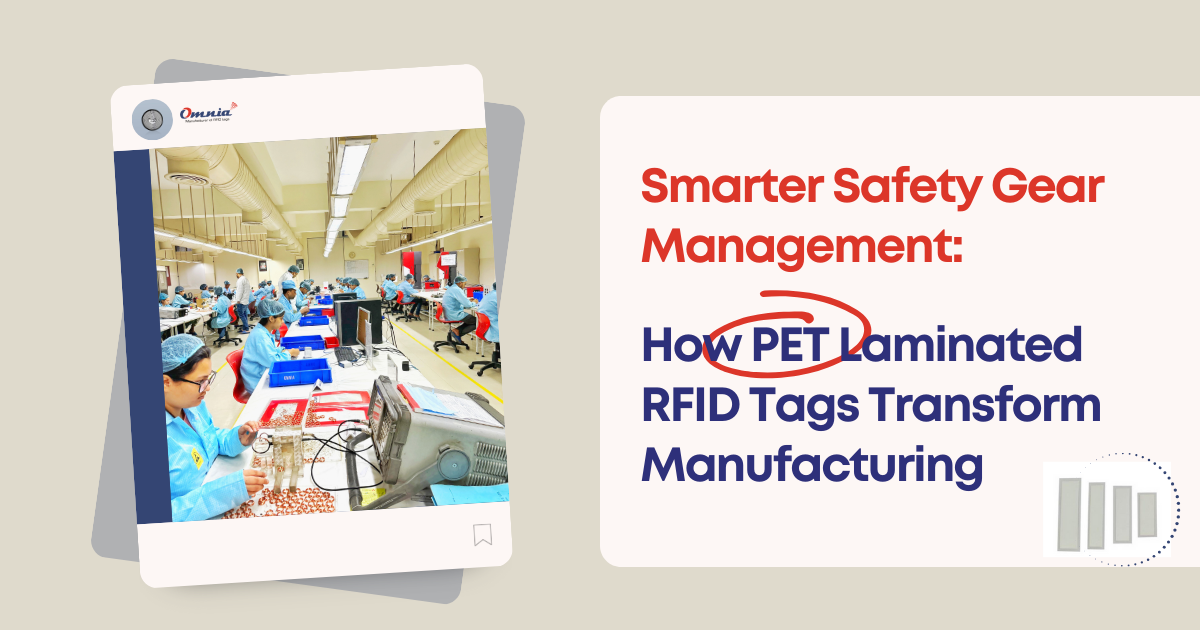
  • Smarter Safety Gear Management: How PET Laminated RFID Tags Transform Manufacturing

    Smarter Safety Gear Management: How PET Laminated RFID Tags Transform Manufacturing

    Have you ever wondered how manufacturing companies keep track of thousands of safety itemsโ€”like helmets, safety shoes, and uniformsโ€”without losing control over inventory or compromising employee safety?

    In todayโ€™s fast-paced manufacturing environment, safety is not just a compliance requirementโ€”itโ€™s a key to efficiency and employee well-being. Tracking personal protective equipment (PPE) such as helmets, shoes, gloves, and uniforms is a major challenge for manufacturers. Mismanaged PPE can lead to safety risks, compliance issues, and unnecessary costs. This is where RFID technology steps in, offering a smarter and more reliable solution.

    At Omnia Technologies, we manufacture PET Laminated RFID Tags specifically designed for industrial and manufacturing applications. These tags are durable, easy to implement, and perfectly suited for tracking safety equipment and employee uniforms. Our PET laminated tags are built to withstand harsh environments, exposure to dust, moisture, and rough handlingโ€”making them ideal for manufacturing facilities.

    Introduction: Why PPE Tracking Matters in Manufacturing

    Manufacturing plants are highly regulated when it comes to worker safety. Each employee is required to wear specific gear, from helmets and safety shoes to protective clothing. However, tracking which employee has been issued which itemโ€”and whether it is still in usable conditionโ€”can become a logistical headache when managed manually.

    Traditional systems, such as logbooks or barcode scanning, have limitations:

    • Manual effort: Logging every item manually is time-consuming and error-prone.
    • Limited visibility: Itโ€™s difficult to know in real time who has which item.
    • Lack of accountability: Missing or damaged gear can go unnoticed until an incident occurs.

    This is where RFID tags make a difference. By attaching an RFID tag to each item, manufacturers gain complete visibility into PPE distribution, usage, and lifecycle.

    Our PET Laminated RFID Tag Solution

    Our PET laminated RFID tags are specifically designed for PPE tracking. PET (Polyethylene Terephthalate) lamination gives the tags a strong protective layer, making them resistant to wear and tear, water, and industrial cleaning processes.

    Key Features of Our PET Laminated Tags:

    • Durability: Withstand harsh manufacturing environments.
    • Flexibility: Suitable for shoes, helmets, and uniforms.
    • High Read Range: Supports UHF technology for accurate, long-distance readability.
    • Customization: Can be printed with logos, numbers, or color codes for easy identification.

    Benefits of Using RFID PET Laminated Tags for PPE Tracking

    Using RFID tags in manufacturing plants brings several measurable benefits and enhances operational efficiency:

    1. Improved Safety Compliance

      Ensure that every employee is equipped with the required gear before entering hazardous areas, reducing the risk of accidents.

    2. Accurate Inventory Management

      Track issued and returned PPE in real time, preventing shortages and avoiding over-purchasing.

    3. Reduced Administrative Burden

      Automate record-keeping for PPE issuance and return, eliminating manual data entry errors.

    4. Real-Time Insights

      Access instant data on PPE usage, lifecycle, and replacement schedules, making planning easier.

    5. Cost Optimization

      Maximize the use of existing PPE stock and prevent unnecessary procurement, lowering overall operational costs.

    Example Use Case: Helmet Tracking in Manufacturing

    Imagine a plant with 500 employees, each issued a helmet. Without RFID, supervisors must manually check and record who has which helmet. With our PET laminated RFID tags, a single scan at the entry gate automatically confirms that each employee has their helmet. If a helmet is missing or due for replacement, the system alerts the supervisor instantly, improving both safety and efficiency.

    Easy Implementation for Manufacturers

    We collaborate with manufacturing companies to ensure smooth adoption of RFID technology:

    1. Consultation: Analyze your PPE management challenges.
    2. Customization: Deliver PET laminated tags in the required shape, size, and encoding.
    3. Integration: Assist in setting up RFID readers and software solutions.

    Conclusion

    In todayโ€™s competitive manufacturing industry, efficient PPE management is crucial for safety, compliance, and cost control. With PET laminated RFID tags from Omnia Technologies, manufacturers can gain complete visibility, automate their PPE tracking process, and create a safer workplace.

    Adopting RFID is not just a technological upgradeโ€”itโ€™s a step toward building a smarter, safer, and more efficient factory floor.

    ๐Ÿ“ฉ Get in touch with Omnia Technologies today to discover how our PET laminated RFID tags can streamline your PPE management and transform your operations.

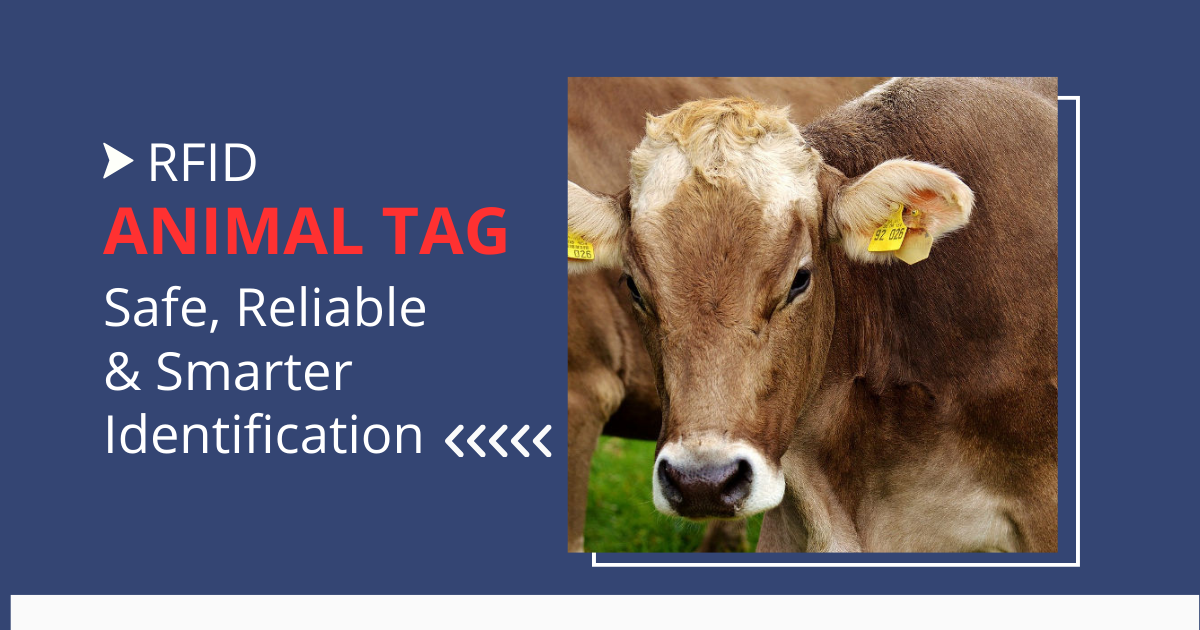
  • RFID Animal Tags: Safe, Reliable & Smarter Identification

    RFID Animal Tags: Safe, Reliable & Smarter Identification

    The way we track and care for animals has evolved dramatically over the years. From traditional ear tags and handwritten logs to advanced RFID animal labels, technology has made identification faster, more accurate, and far more secure.

    Today, RFID animal identification is a trusted solution across livestock farming, pet care, veterinary practice, and animal tracking. With just a quick scan, farmers, veterinarians, and zookeepers can instantly access vital data such as health records, movement history, and ownership details. This not only reduces human error but also enhances animal welfare by ensuring real-time monitoring and efficient care.

    One of the most common questions people ask is:

    Are RFID Tags Safe for Animals?

    The answer is yes, completely safe.โ€” RFID ear tags, glass tags, and injectable microchips are completely safe. They are designed using biocompatible, non-toxic materials that do not cause irritation or harm.

    • For cows, sheep, and goats, ear tags are applied quickly and painlessly
    • For dogs and cats, microchips are implanted just beneath the skin, a safe and widely approved method used globally.
    • For zoo animals and wildlife tracking, RFID ensures better monitoring while prioritizing animal well-being.

    At Omniatags, we manufacture ICAR-approved RFID animal tags that meet strict global standards, ensuring both safety and durability.

    Durability is another common concern.

    How Long Do RFID Animal Tags Last?

    On average, RFID animal tags last 10โ€“20 years, which means they cover the full lifespan of most livestock and pets. This makes them a cost-effective, one-time investment that reduces the need for frequent replacements.

    Applications of RFID Animal Labels

    ๐Ÿ„ Livestock Management (Cows, Sheep, Goats)

    • Monitor milk yield and health conditions.
    • Track movement and prevent disease spread.
    • Improve breeding programs with accurate data.

    ๐Ÿ• Pet Identification (Dogs, Cats)

    • Microchips ensure lost pets can be quickly reunited with owners.
    • Permanent identification system trusted by veterinarians worldwide.

    ๐Ÿฆ“ Animal Tracking & Zoo Care

    • RFID helps track endangered species.
    • Assists zookeepers in managing medical history and breeding cycles.
    • Provides reliable data for researchers and caretakers.

    Why Choose Omniatags for Animal RFID Tags?

    At Omniatags, we design and manufacture a wide range of RFID ear tags, glass tags, and injectable microchips that are:

    • โœ”๏ธ Safe & Non-Toxic โ€“ Made from biocompatible materials.
    • โœ”๏ธ Durable & Long-Lasting โ€“ Up to 20 years of use.
    • โœ”๏ธ Globally Approved โ€“ ICAR-certified and trusted worldwide.

    Farmers trust us for livestock productivity, veterinarians for medical tracking, zoos for animal care, and pet owners for safety and security.

    Conclusion

    By combining technology with care, RFID animal labels have transformed how we manage livestock, protect pets, and track animals. At Omniatags, we are committed to delivering ICAR-approved, globally trusted animal identification solutions that make management smarter, safer, and more efficient.

    ๐Ÿ‘‰ Ready to upgrade your animal management system? Connect with Omniatags today to explore our full range of RFID animal tags and microchips.

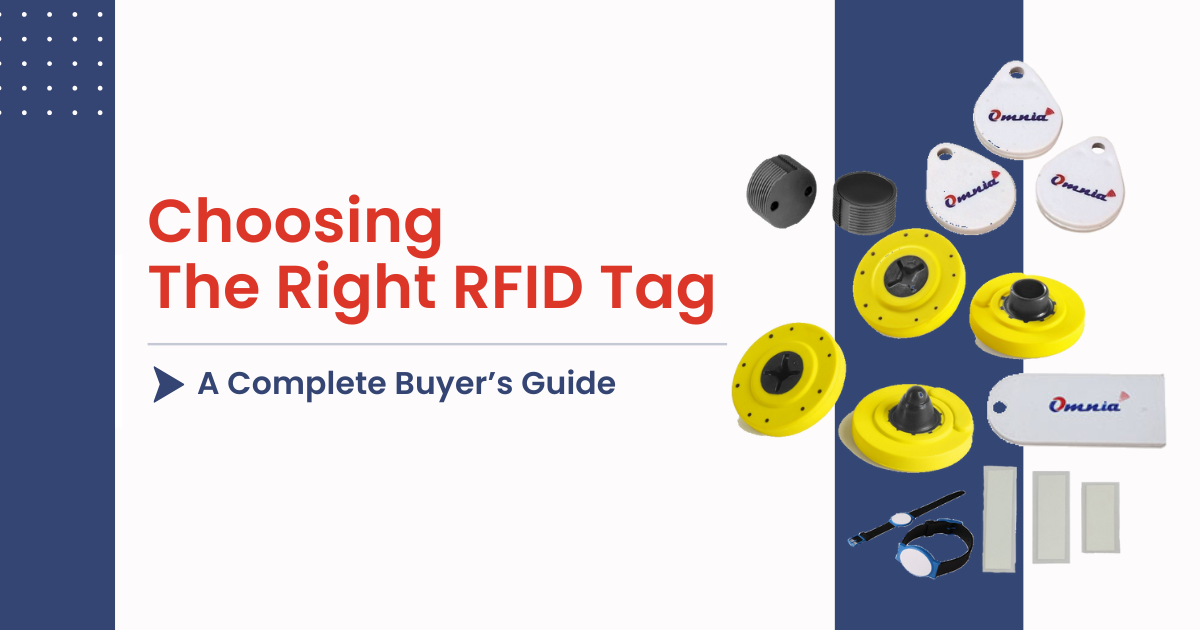
  • Choosing the Right RFID Tag: A Complete Buyerโ€™s Guide

    Choosing the Right RFID Tag: A Complete Buyerโ€™s Guide

    In today’s rapidly advancing industries, RFID tags have become an essential part of modern tracking and identification systems. Whether you’re managing livestock, automating warehouse logistics, securing access control points, or monitoring pharmaceutical inventory, selecting the right RFID tag is crucial for performance, reliability, and cost-efficiency.

    As a leading RFID tag manufacturer, Omniatags offers a wide range of durable, application-specific RFID tags. This guide will help you understand what to look for when choosing RFID tags based on your industry, environment, and tracking needs.

    1. Understand Your Application Environment

    Before choosing an RFID tag, identify where and how it will be used. Conditions such as exposure to heat, moisture, chemicals, or metal surfaces significantly affect tag performance.

    For example:

    • In Industry & Logistics, RFID tags are often exposed to rugged conditions. Youโ€™ll need on-metal RFID tags that are durable and offer long-range readability. Explore our Industry & Logistics RFID Tags.
    • For waste bin tracking, outdoor-rated RFID tags with weatherproof materials are ideal.
    • In Pharma & Healthcare, you need high-precision, tamper-proof RFID tags for medical assets and inventory. See our Pharma & Healthcare RFID Tags.
    • For Access & Security, RFID tags must work seamlessly with gate systems and ID credentials. Browse our Access & Security RFID Tags.


    2. Choose the Right RFID Frequency

    Different RFID tags operate at different frequencies. Here’s a quick breakdown:

    • Low Frequency (LF) โ€“ Best for animal tracking. LF tags perform well near liquids and are used in ICAR-approved animal ear tags.
    • High Frequency (HF) โ€“ Suitable for access control, ticketing, and some pharma applications.
    • Ultra High Frequency (UHF) โ€“ Offers long read ranges and fast data transfer. Perfect for logistics, warehouse automation, and machinery tracking.


    3. Material and Form Factor Matter

    The physical construction of the RFID tag must match the application:

    • Hard tags are durable and ideal for metal machinery, bins, and crates.
    • Flexible or label tags are better for IT equipment, files, and pharmaceutical packaging.
    • Tamper-proof tags are essential for asset security and theft prevention.


    4. Consider the Tag Attachment Method

    Tags can be:

    • Adhesive-backed (for smooth, clean surfaces)
    • Screw-mounted or riveted (for rugged machinery or bins)
    • Ear-tag format (for animal identification)

    Choosing the right attachment method ensures long-term performance in your environment.

    5. Check for Compliance and Certifications

    Especially in animal tracking, government compliance is mandatory. Omniatags manufactures ICAR-approved RFID animal ear tags, ensuring you meet regulatory standards while maintaining traceability.

    6. Customize Tags for Your Unique Needs

    Omniatags offers custom RFID tags with options such as:

    • Laser-engraved serial numbers
    • Embedded logos or QR codes
    • Customized chip types and memory sizes
    • Specific encoding for your tracking systems

    Customization ensures that your RFID tags align with your data management and security protocols.

    7. Work with a Trusted RFID Tag Manufacturer

    Choosing a reliable manufacturer is just as important as choosing the tag. With years of expertise, Omniatags provides:

    • ICAR-approved tags
    • Global supply capacity
    • Custom manufacturing options
    • Expertise across multiple industries includes animal tracking, logistics, security, pharma, and waste management

    Explore all our RFID tag categories on www.omniatags.com.

    Conclusion

    Choosing the right RFID tag requires a deep understanding of your application, environment, and tracking objectives. Whether you need tags for livestock, warehouse equipment, pharma inventory, or access systems, Omniatags has a solution designed to meet your needs.

    Let us help you track smarter โ€” with durable, high-quality RFID tags built for your business.

  • RFID and its applications in the Healthcare Industry

    RFID and its applications in the Healthcare Industry

    RFID adoption is on the rise these days. It has been successful in a variety of industries, including retail, manufacturing, and logistics. Though it is not a new technology, it has evolved significantly. RFID is now a powerful business technology for data collection, asset tracking, and asset and equipment movement. Numerous benefits exist in the use of Radio Frequency Identification (RFID) technology in the hospital. These include the ability to provide real-time traceability of medical equipment, the location of your staff and even your patients.

    It’s also used in supply chain management, inventory control, and waste management. Furthermore, it is used by the authorities to track prisoners and by farmers to track animals.

    How can RFID Technology be used in the Healthcare Industry?

    a)   Patient Tracking and History Records

    A patient’s wrist is girded with an RFID band. The hospital keeps track of the patient using RFID. The wristband stores all relevant information such as name, medical history, allergies, and so on. When a patient has been admitted for an extended period of time, RFID can assist the doctor in determining whether the patient is allergic to any medications. The patient’s historical record also aids in surgery by providing crucial information.

    The RFID tag can be really handy, e.g. if a patient has memory problems, they may stray or get lost in a hospital. Through RFID wristbands, the hospital can know the exact whereabouts of the patient.

    b) Equipment Tracking

    Tracking machines, equipment, and vehicles is critical for hospitals. It not only informs them of the location of their vehicles, equipment, and so on, but it also aids in asset maintenance.

    Hospital assets are critical and must always be ready for use. RFID tags are used to track assets as they move within and outside of the hospital. When it comes to the Operation Theatres, it is mandatory that assets be inspected on a regular basis to avoid unplanned breakdowns. The Asset Maintenance Management software comes in handy when dealing with such mission-critical assets.

    c) Medicine and Pharmaceutical Tracking

    Pharmaceuticals can be tracked and managed using RFID technology in hospitals. The system notifies users of the expiration dates and stock levels of medications. Because pharmaceuticals and medicines are the most frequently used and critical items in a hospital, each facility must maintain a consistent stock of essential medicines.

    Medicines and surgical equipment are high-priced items. As a result, it is critical for healthcare facilities to keep stock and track of these items.

    Benefits of using RFID in healthcare

    a) RFID technology in hospitals, labs and entire supply chains offer real-time traceability of every blood sample or pallet of medication as well as real-time visibility into your inventory.

    b) RFID enables your hospital to monitor the temperature of heat-sensitive drugs throughout the supply chain and take the necessary measures to maintain standards and compliance.

    c) RFID in your healthcare organization provides immediate or real-time tracking and management of your staff across all types of patient care environments. This provides useful information when tracking productivity in a busy hospital.

    d) Proximity cards offer a seamless and secure way of accessing specific areas within the facility instead of memorizing and entering PIN codes every time.

    e) Passive RFID tags are low-cost and small and are easily attached to small devices. Passive tags are also able to tag many items at once. The tag can track assets and other items in areas where WiFi is not available.

    Follow the link to know more about our RFID Tags – https://www.omniatags.com/application-details/pharma-healthcare

    Conclusion

    RFID innovation has a lot of potentials to assist in the medical services of hospitals. Moreover, the system opens up new doors for enhanced security, operational effectiveness, and cost savings by tagging stocks, assets, patient data, and personnel records. RFID systems are mostly utilized in countries like the USA, France, Japan, Germany, UK, Italy, Spain, etc.

    RFID technology in the healthcare industry must be implemented in order to improve the level of patient care. Furthermore, it helps hospitals in the better management of their assets and equipment.

  • Enhancing Supply Chain Management using RFID

    Enhancing Supply Chain Management using RFID

    RFID technology has the potential to improve speed and efficiency across the entire supply chain. One of the technologies that have really started to significantly impact the supply chain is RFID (Radio Frequency Identification).

    RFID, for those of you who are unfamiliar, is a technology that uses radio waves to automatically identify people or objects. Data is stored on a microchip that is connected to an antenna (the chip and the antenna together are called an RFID transponder or an RFID tag). The antenna allows the chip to send identification information to a reader, which converts radio waves from RFID tag into digital information that can then be passed on to computers.

    RFID is not just a replacement for barcodes. RFID ensures that the right goods are available in the right place with no discrepancies and zero errors. It makes the supply chain considerably more precise and improves the efficiency and reliability of the entire chain. As real-time information is made available also administration and planning processes can be significantly improved.

    A group of metal objects

AI-generated content may be incorrect.

    Some of our RFID tags for Supply Chain Management

    Almost all businesses operate global supply chains โ€” sourcing raw material and components from the most cost-effective locations, adding value and assembling them in the most cost-effective locations, and finally selling them in markets that have maximum sustained demand and profitability. Scalability has also led to increased efficiencies in supply chain processes, such as identification, storage, inventory control, transportation, distribution, and accounting.

    RFID is useful not only in manufacturing but also in the distribution of finished goods. It has the potential to increase the speed of delivery management, improve efficiency, visibility, and accuracy in selection and distribution processes, as well as lower distribution costs.

    If youโ€™re one of these individuals still on the fence about RFID, below are five benefits that result from using this technology.

    a) Improve the quality and transparency of data across the supply chain – When data is read from a tag, answers are provided to the questions: What? Why? Where? and When? This is the very essence of RFID applications in the industry.

    b) Makes it easier to implement flexible manufacturing processes – RFID is used to reliably read and write data directly to a tag on an object in real-time. This capability can be leveraged to make flexible manufacturing a reality.

    c) Increase the accuracy and reduce the time spent taking inventories – RFID can be used to reduce or eliminate the need for โ€œhand-scanning,โ€ resulting in immediate and significant improvements in inventory tracking.

    d) Increase efficiency and cut down on rework – RFID can be particularly advantageous in closed-loop systems where reusable transport mechanisms are used. Real-time visibility allows the observation and close monitoring of products and processes so that quick action can be taken and process improvements

    e) Reliable track and trace in challenging physical environments – Specially encapsulated RFID tags are designed to survive and perform reliably in even the most challenging of environments

    RFID appears to have limitless potential for increasing speed and efficiency throughout the extended supply chain.