
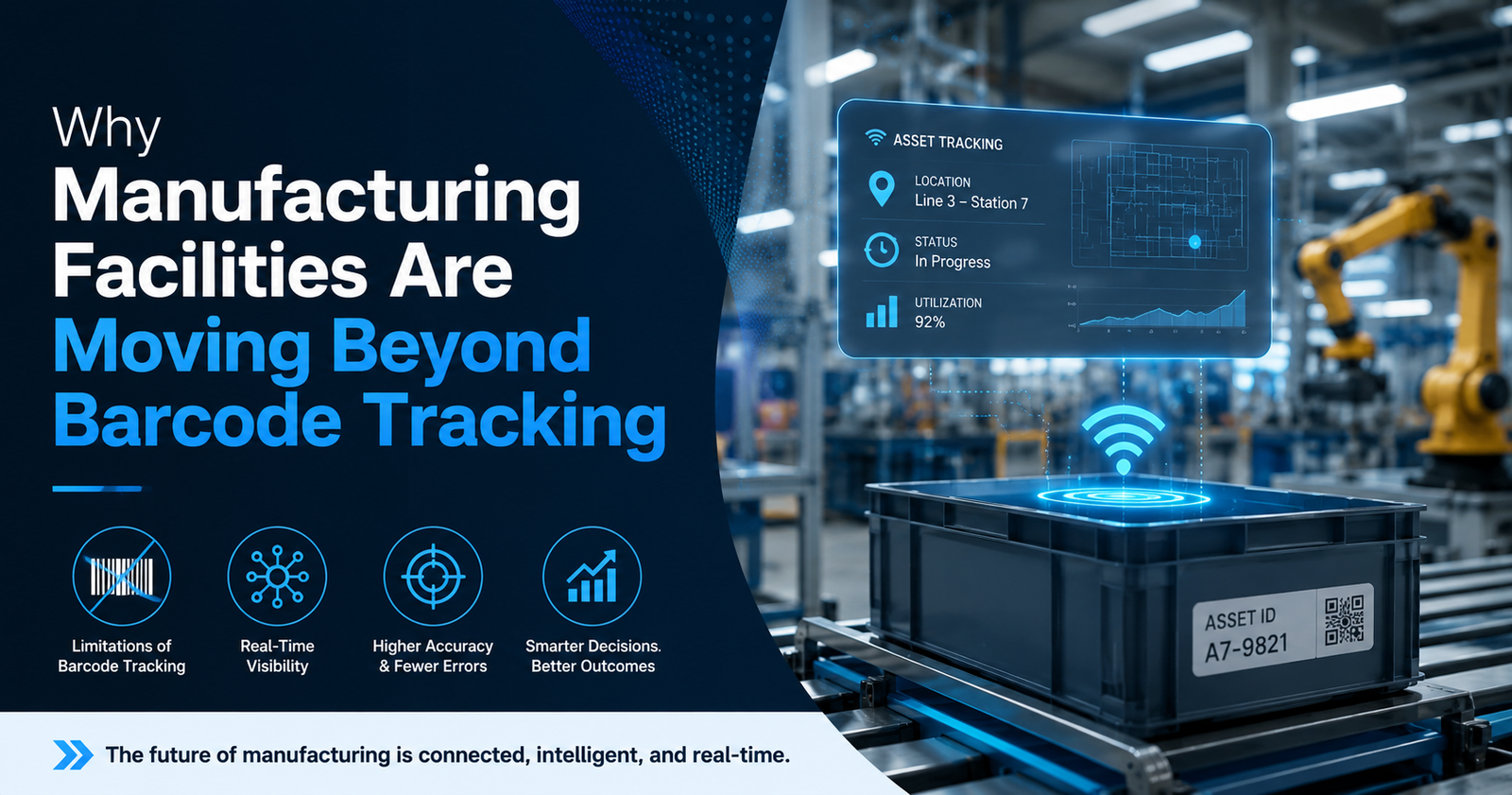
Manufacturing floors have changed significantly over the last few years. Production cycles are faster, warehouses are larger, and businesses are expected to maintain accurate inventory visibility at every stage of operations. In this environment, traditional barcode-based systems are no longer enough for many industrial workflows.
Manufacturers today require faster identification methods, automated tracking, and real-time operational visibility without slowing down production. This is one of the major reasons RFID technology is becoming increasingly common across manufacturing and warehouse environments.
From raw material movement to finished goods dispatch, RFID-enabled tracking helps industries reduce manual dependency while improving operational efficiency.
As an RFID tag manufacturer, Omnia Technologies develops industrial RFID tags and labels designed for manufacturing, inventory management, warehouse operations, and industrial automation applications.
The Problem with Manual and Barcode-Based Tracking
Barcodes still work well for basic identification, but large-scale manufacturing operations often face challenges when tracking thousands of moving items daily. In many facilities:
- Workers spend significant time scanning products individually
- Inventory updates are delayed
- Production visibility becomes limited
- Tool tracking is inconsistent
- Warehouse audits consume operational hours
These gaps create inefficiencies that directly affect production timelines and inventory accuracy.
RFID technology addresses these issues by allowing automatic identification without direct line-of-sight scanning.
How RFID Improves Manufacturing Operations
- Faster Inventory Handling
Manufacturing warehouses process continuous inward and outward material movement. RFID technology simplifies inventory management by allowing multiple items to be identified simultaneously.
This helps facilities:
- Reduce manual counting
- Improve stock accuracy
- Speed up warehouse audits
- Monitor inventory movement in real time
For industries handling high-volume operations, this creates a noticeable improvement in warehouse productivity.
- Better Visibility Across Production Stages
Production delays often occur because manufacturers lack visibility into where components or materials are currently located.
RFID-enabled systems help track movement across:
- Assembly lines
- Production zones
- Packaging units
- Storage areas
- Dispatch sections
This gives operations teams better control over workflow movement and production planning.
Improved Tool and Asset Tracking
In industrial environments, misplaced tools and reusable assets can slow down operations. Searching for equipment wastes valuable production time.
RFID tags attached to tools, pallets, bins, and containers help manufacturers:
- Locate assets quickly
- Monitor equipment movement
- Reduce losses
- Improve operational efficiency
This is especially useful in large facilities where assets move across multiple departments daily.
Supporting Warehouse Automation
Modern warehouses increasingly rely on automated workflows. RFID technology supports this shift by improving material identification and reducing scanning dependency.
Applications include:
- Automated receiving processes
- Shipment verification
- Smart storage systems
- Dock door tracking
- Pallet identification
With faster data capture, warehouse teams can process larger volumes without increasing manual workload.
RFID in Real Manufacturing Environments
RFID adoption is growing across industries where operational speed and traceability are critical.
Common Use Cases Include
Industrial Inventory Management
Manufacturers use RFID labels to improve visibility of raw materials, components, and finished goods.
Work-in-Progress Tracking
Production teams can monitor product movement across manufacturing stages more efficiently.
Returnable Asset Management
Reusable containers, pallets, and crates can be tracked across warehouses and logistics networks.
Smart Warehousing
RFID-enabled systems improve storage accuracy and material handling processes.
Industrial Equipment Tracking
Facilities can maintain better visibility of high-value tools and operational assets.
Choosing RFID Tags for Industrial Applications
Manufacturing environments can be demanding for identification systems. Heat, moisture, chemicals, dust, and metal surfaces often affect tracking performance. This is why industries require RFID tags built specifically for industrial use cases.
Factors manufacturers usually consider include:
- Surface compatibility
- Environmental durability
- Read range requirements
- Mounting methods
- Exposure conditions
Industrial-grade RFID tags are designed to maintain performance even in challenging operational environments.
Omnia Technologies manufactures RFID tags and labels engineered for industrial applications including manufacturing operations, warehouse management, logistics tracking, and asset identification.
Manufacturing Is Moving Toward Connected Operations
Manufacturing facilities are increasingly investing in connected technologies to improve operational control and reduce process inefficiencies.
RFID technology supports this transition by enabling:
- Faster operational visibility
- Real-time inventory updates
- Better traceability
- Improved warehouse accuracy
- Reduced manual processes
As industries continue adopting automation-driven workflows, RFID will remain an important part of modern manufacturing infrastructure.
Conclusion
Manufacturing operations today require more than basic identification systems. Businesses need accurate tracking, faster workflows, and real-time visibility across production and warehouse environments.
RFID technology helps manufacturers improve operational efficiency by simplifying inventory management, supporting automation, and reducing manual tracking dependency.
With growing demand for connected manufacturing systems, RFID adoption continues to expand across industrial sectors worldwide.
As a manufacturer of industrial RFID tags and labels, Omnia Technologies supports businesses with RFID solutions designed for manufacturing, warehousing, logistics, and industrial automation environments.