
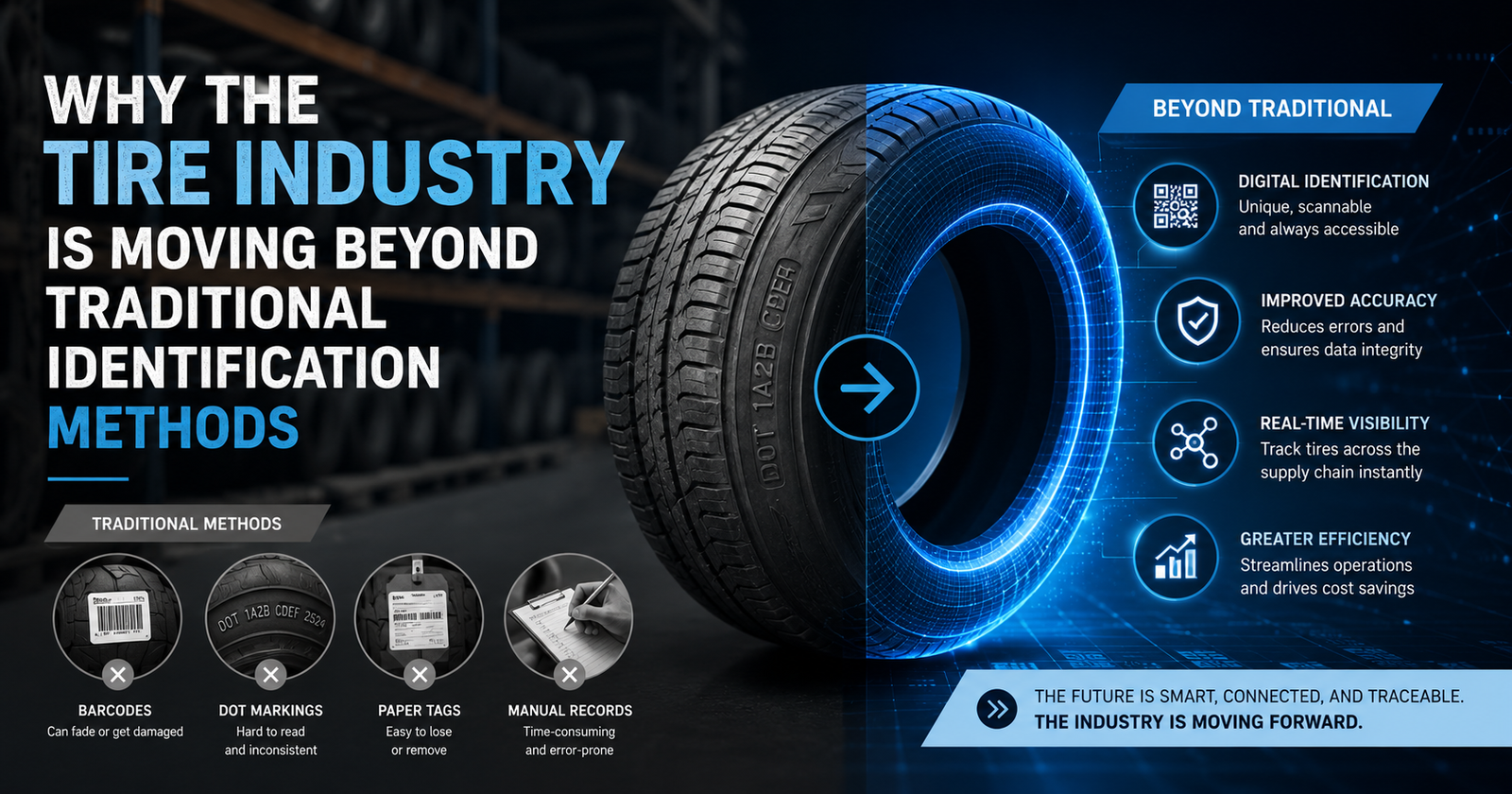
Tires are among the most valuable and heavily utilized assets in transportation, logistics, mining, construction, and fleet operations. Yet many organizations still rely on manual records, visual inspections, barcode labels, or paper-based systems to track tire inventory and performance.
As tire costs continue to rise and fleet managers seek greater operational efficiency, traditional identification methods often struggle to provide real-time visibility into tire movement, maintenance history, and usage patterns.
This is where RFID tire tags are transforming tire management.
By embedding a durable RFID tag directly into the tire, organizations can create a unique digital identity for every tire, enabling automated tracking throughout its entire lifecycle—from manufacturing and warehousing to deployment, maintenance, retreading, and end-of-life disposal.
In this guide, we explore how RFID tire tags work, implementation best practices, key technical considerations, and the business benefits of deploying RFID-enabled tire identification systems.
What Are RFID Tire Tags?
RFID tire tags are specialized radio frequency identification devices designed to withstand the harsh conditions experienced by tires during their operational life.
Unlike surface labels that can become damaged, dirty, or unreadable, tire RFID tags are engineered to remain functional despite:
- High temperatures
- Road friction
- Vibration and impact
- Exposure to moisture
- Dirt and chemicals
- Continuous tire flexing
Each RFID tire tag contains a unique identification number that can be read wirelessly using compatible RFID readers.
The stored data can be linked to information such as:
- Tire serial numbers
- Manufacturing details
- Vehicle assignment
- Maintenance records
- Retreading history
- Usage hours
- Inspection reports
- Fleet ownership information
How RFID Tire Tracking Works
The RFID tire management process typically follows these steps:
1. Tire Identification
Each tire receives a unique RFID-enabled identity during manufacturing or before deployment.
2. Data Registration
The RFID tag ID is linked to a centralized database containing tire-specific information.
3. Automated Reading
RFID readers capture tire information without requiring line-of-sight scanning.
4. Real-Time Updates
Whenever a tire moves through checkpoints, workshops, warehouses, or inspection stations, the database updates automatically.
5. Lifecycle Monitoring
Organizations gain visibility into the complete tire journey from purchase to replacement.
Why Tire Manufacturers and Fleet Operators Use RFID Technology
1. Enhanced Tire Traceability
RFID technology enables organizations to track every tire individually throughout its lifecycle.
Benefits include:
- Improved asset visibility
- Reduced identification errors
- Faster inventory audits
- Simplified compliance reporting
2. Improved Maintenance Planning
Maintenance teams can instantly access tire history and service records.
This helps organizations:
- Schedule preventive maintenance
- Monitor wear patterns
- Improve tire performance
- Extend operational lifespan
3. Faster Inventory Management
Traditional inventory counting can take hours or even days.
RFID allows multiple tires to be identified simultaneously, significantly reducing:
- Labor requirements
- Audit time
- Inventory discrepancies
4. Better Fleet Performance
Fleet managers gain access to accurate tire utilization data, helping optimize:
- Tire rotation schedules
- Replacement planning
- Fuel efficiency initiatives
- Asset utilization
Key Technical Requirements for RFID Tire Tags
Not all RFID tags are suitable for tire applications.
Successful tire identification depends on selecting tags that meet demanding operational requirements.
1. Durability
Tire tags must withstand:
- Mechanical stress
- Continuous flexing
- High-speed rotation
- Environmental exposure
2. Read Performance
Reliable read rates are essential for:
- Vehicle inspection points
- Service workshops
- Warehouse operations
- Fleet management systems
3. Temperature Resistance
Tires generate heat during operation.
RFID tags must continue functioning under elevated temperature conditions without performance degradation.
4. Long-Term Reliability
A tire tag should remain operational throughout the tire’s intended service life.
5. Secure Data Integrity
Unique identifiers help prevent duplication and support accurate asset management.
RFID Tire Tag Implementation Playbook
Organizations planning RFID deployment should follow a structured implementation strategy.
Step 1: Define Business Objectives
Identify primary goals such as:
- Tire traceability
- Maintenance automation
- Inventory visibility
- Lifecycle management
- Regulatory compliance
Clear objectives help determine the required RFID infrastructure.
Step 2: Select the Appropriate RFID Tire Tag
Tag selection should consider:
- Tire type
- Operating environment
- Read distance requirements
- Durability expectations
- Data management needs
Industrial and commercial tire applications often require highly rugged RFID tags specifically engineered for tire integration.
Step 3: Establish Data Standards
Define which information will be associated with each tire:
- Asset ID
- Vehicle ID
- Manufacturing batch
- Maintenance history
- Service schedules
Standardized data improves reporting accuracy and scalability.
Step 4: Plan Reader Infrastructure
Reader placement is critical for successful implementation.
Common read points include:
- Manufacturing lines
- Warehouse entry/exit gates
- Service centers
- Vehicle inspection stations
- Fleet depots
Step 5: Conduct Pilot Testing
Before large-scale deployment:
- Validate read performance
- Test environmental durability
- Verify data accuracy
- Evaluate workflow integration
Pilot projects help identify challenges early.
Step 6: Scale Deployment
Once performance targets are achieved, organizations can expand RFID usage across:
- Multiple facilities
- Regional fleets
- Global operations
- Tire distribution networks
Common Tire RFID Applications
Fleet Management
Track tire assignments, maintenance schedules, and replacement cycles across large vehicle fleets.
Commercial Transportation
Improve tire visibility throughout transportation operations.
Mining Operations
Monitor high-value tires operating under extreme environmental conditions.
Construction Equipment
Maintain accurate tire records for heavy machinery and equipment.
Tire Manufacturing
Support production traceability and quality control initiatives.
Tire Retreading
Track multiple retread cycles while maintaining historical tire records.
Challenges Organizations Should Consider
Although RFID offers significant advantages, successful deployment requires careful planning.
Potential challenges include:
- Improper tag selection
- Inadequate reader positioning
- Poor data management practices
- Lack of process standardization
- Insufficient testing before deployment
Working with experienced RFID tag manufacturers can help organizations overcome these challenges and maximize return on investment.
The Future of Intelligent Tire Management
The tire industry is rapidly embracing digital transformation.
As connected fleets, predictive maintenance systems, and data-driven operations become standard, RFID tire tags will play a central role in creating smarter and more transparent tire management ecosystems.
Organizations that implement RFID-enabled tire identification today gain access to valuable operational insights that support:
- Increased efficiency
- Lower operating costs
- Better asset utilization
- Improved maintenance planning
- Enhanced lifecycle visibility
The result is a more intelligent, scalable, and data-driven approach to managing one of the most critical assets in transportation and industrial operations.
Conclusion
Tire management is no longer limited to manual inspections and spreadsheet-based records. RFID tire tags provide a reliable foundation for tire traceability, automated identification, and lifecycle visibility.
By implementing a structured RFID tire tracking strategy, organizations can improve inventory accuracy, streamline maintenance processes, and gain deeper insight into tire performance throughout the asset lifecycle.
As fleets and industrial operations continue to pursue operational excellence, RFID-enabled tire identification is becoming an essential component of modern asset management.