Author: instaquirk

  • Delivering Quality RFID Tags: Why Omniatags Stands Apart

    Delivering Quality RFID Tags: Why Omniatags Stands Apart

    In today’s fast-moving industries—whether it’s supply chain, manufacturing, livestock management, or waste tracking—the reliability of an RFID system depends largely on one critical component: the tag itself. At Omniatags, we understand that every project is unique, and so are its tagging challenges. That is why we focus on providing high-quality RFID tags that deliver consistent, real-world performance tailored to the application they serve.

    Why RFID Tag Quality Matters

    The true strength of an RFID solution is measured in the field—where tags face heat, pressure, moisture, rough handling, chemicals, or long-term outdoor exposure. A low-quality or mismatched tag can lead to:
    • Poor read range
    • Data inaccuracy
    • Operational downtime
    • Increased replacement cost
    • Failed deployments
    This is why Omniatags prioritizes quality above everything else. Each tag is manufactured to international standards and designed to perform in demanding environments.

    High-Quality RFID Tags We Provide

    Omniatags offers a comprehensive portfolio of RFID tags built for accuracy, durability, and long-term performance. Under every application category, we provide multiple tag options—because no two customers or operational environments are the same.

    1. Animal Identification Tags (ICAR-Approved)

    • High-grade TPU material for flexibility and durability
    • Strong retention rate
    • UHF & LF options
    • Suitable for cattle, sheep, goat, dog
    • Global compliance for livestock traceability 

    2. Tire RFID Tags

    • Patch and spring RFID tire tags
    • Heat, pressure & abrasion-resistant
    • Designed for retreading, fleet management & tire lifecycle tracking
    • Proven performance in harsh industrial conditions 

    3. Waste Bin RFID Tags

    • On-metal and embedded bin tags
    • Waterproof, chemical-resistant
    • Optimized for rough outdoor handling 

    4. Warehouse & Asset Tracking Tags

    • On-metal tags
    • Label tags
    • Long-range hard tags
    • Pallet, drum and container tracking tags 

    5. Textile & Laundry Tags

    • Flexible, washable
    • Heat-resistant for commercial laundry cycles
    • Strong stitching and embedding options 

    From harsh environments to lightweight retail applications, our tags are designed to deliver high accuracy, longer read distances, and consistent results.

    Multiple Tag Options Under One Application

    One size does not fit all in RFID. Even within a single application—like tires, warehouse assets, animals, waste bins, or textiles—operating conditions vary widely. To ensure correctness and high performance:
    • We provide several tag choices under the same category. 
    • We evaluate your environment, surface, operating temperature, movement patterns, and reading requirements. 
    • We then recommend the best-performing and highest-quality tag for your specific use case. 
    This approach ensures that customers never compromise on performance—even when working within project budget constraints.

    Our Commitment: Quality + Guidance

    At Omniatags, we support customers not just with quality products, but also with technical guidance and application consulting. We help clients identify:
    • The right chip type
    • The ideal tag size & material
    • The correct mounting method
    • Real-world testing requirements
    • Cost-effective yet high-quality options 
    Our goal is simple: To ensure every business achieves reliable, consistent RFID performance with a tag perfectly suited to its environment.

    Conclusion

    RFID success begins with choosing the right tag—and choosing the right manufacturer. With Omniatags, customers receive:
    • High-quality RFID tags
    • Multiple tag options for a single application
    • Expert guidance based on their environment and project requirements
    • Reliable performance even in the toughest conditions 
    Have a project in mind? Share your requirements through our Contact Us form, and we’ll guide you to the best-fit RFID tag.
  • Enhancing RFID Read Range: Key Factors for Reliable Tag Performance

    Enhancing RFID Read Range: Key Factors for Reliable Tag Performance

    In the world of RFID technology, the read range determines how efficiently data can be captured between a tag and a reader. A strong, stable read range improves system accuracy, reduces manual intervention, and ensures real-time visibility — whether used in warehouse management, asset tracking, animal identification, or logistics automation.

    However, multiple factors influence the effective distance between an RFID tag and reader. Understanding these parameters helps businesses select the most suitable tag for their environment and operational goals.

    Here are the essential elements that impact RFID tag read range and how to optimize them for better performance.

    1. Antenna Design and Tag Construction

    The antenna design is the core factor defining an RFID tag’s read performance. The size, material, and geometry of the antenna influence its ability to receive and reflect signals. Larger antennas generally support longer read distances, while compact tags are ideal for limited spaces.
    At Omnia Technologies, our RFID tags are engineered with high-sensitivity IC chips and precision-tuned antennas, ensuring consistent communication even in dense industrial settings or harsh outdoor conditions.

    2. Reader Power and Antenna Configuration

    The RFID reader’s power output and antenna gain directly affect how far a tag can be detected. Adjusting the transmission power or optimizing the antenna placement enhances detection coverage and minimizes signal loss. For high-density environments, multi-antenna configurations improve accuracy and reduce blind spots — essential for real-time asset monitoring.

    3. Mounting Surface and Material

    The surface on which a tag is applied significantly affects signal performance. Metal, liquid, and certain plastics can absorb or reflect radio waves, reducing the read range. To overcome this, Omnia Technologies offers specialized metal-mount RFID tags and encapsulated designs that maintain stable performance on challenging surfaces like machinery, bins, or livestock equipment.

    4. Tag Orientation and Placement

    Tag alignment with the reader’s electromagnetic field impacts signal transmission. Installing tags consistently and ensuring line-of-sight visibility helps achieve maximum read efficiency. This is especially important in automated warehouses, conveyor systems, or vehicle tracking setups where direction consistency ensures optimal read rates.

    5. Environmental Conditions

    Environmental factors such as temperature, humidity, and RF interference can degrade tag readability. Selecting rugged RFID tags built with weather-resistant encapsulation ensures uninterrupted performance in outdoor or high-moisture environments.

    Benefits of Optimized RFID Read Range

    • Faster and more accurate data capture
    • Reduced manual scanning time
    • Improved system reliability and visibility
    • Consistent read performance across varied materials
    • Enhanced scalability for IoT and smart automation systems

    Conclusion

    Optimizing the RFID read range is crucial for achieving dependable and efficient tracking. The right balance between tag design, reader configuration, and environmental adaptation ensures seamless operation across industries.

    At Omnia Technologies, we design and manufacture high-performance RFID tags engineered for superior read range and durability. From asset and warehouse tracking to animal identification and waste management, our RFID solutions are built to deliver accuracy, longevity, and scalability.

    Discover advanced RFID tags tailored to your needs at 👉 www.omniatags.com

  • Smarter Safety Gear Management: How PET Laminated RFID Tags Transform Manufacturing

    Smarter Safety Gear Management: How PET Laminated RFID Tags Transform Manufacturing

    Have you ever wondered how manufacturing companies keep track of thousands of safety items—like helmets, safety shoes, and uniforms—without losing control over inventory or compromising employee safety?

    In today’s fast-paced manufacturing environment, safety is not just a compliance requirement—it’s a key to efficiency and employee well-being. Tracking personal protective equipment (PPE) such as helmets, shoes, gloves, and uniforms is a major challenge for manufacturers. Mismanaged PPE can lead to safety risks, compliance issues, and unnecessary costs. This is where RFID technology steps in, offering a smarter and more reliable solution.

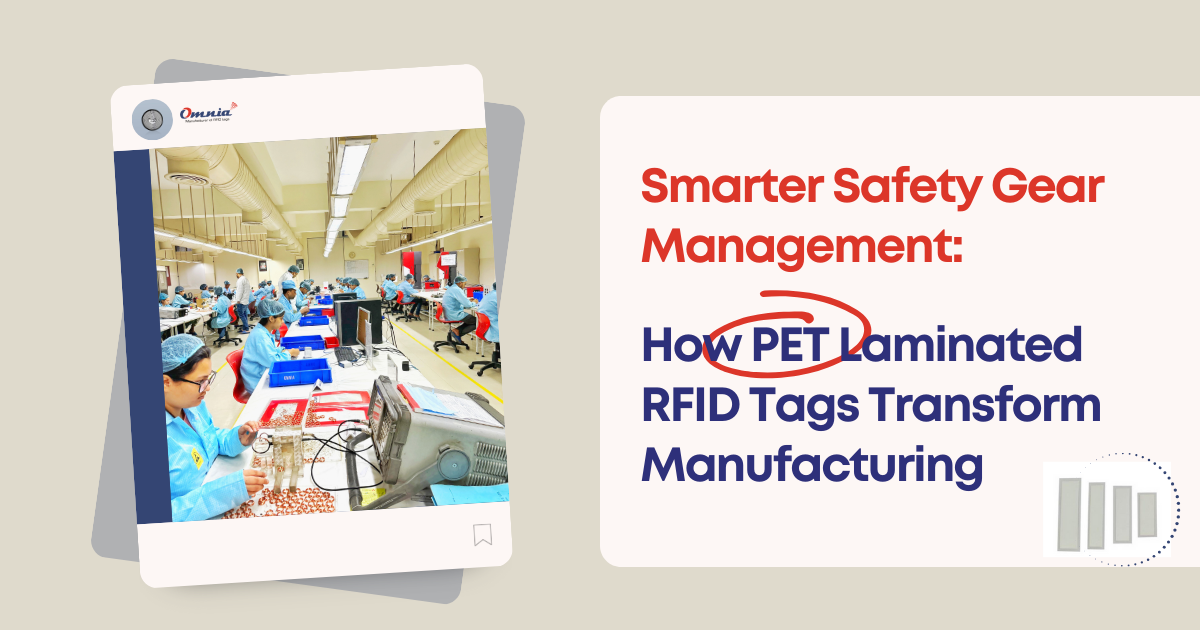
    At Omnia Technologies, we manufacture PET Laminated RFID Tags specifically designed for industrial and manufacturing applications. These tags are durable, easy to implement, and perfectly suited for tracking safety equipment and employee uniforms. Our PET laminated tags are built to withstand harsh environments, exposure to dust, moisture, and rough handling—making them ideal for manufacturing facilities.

    Introduction: Why PPE Tracking Matters in Manufacturing

    Manufacturing plants are highly regulated when it comes to worker safety. Each employee is required to wear specific gear, from helmets and safety shoes to protective clothing. However, tracking which employee has been issued which item—and whether it is still in usable condition—can become a logistical headache when managed manually.

    Traditional systems, such as logbooks or barcode scanning, have limitations:

    • Manual effort: Logging every item manually is time-consuming and error-prone.
    • Limited visibility: It’s difficult to know in real time who has which item.
    • Lack of accountability: Missing or damaged gear can go unnoticed until an incident occurs.

    This is where RFID tags make a difference. By attaching an RFID tag to each item, manufacturers gain complete visibility into PPE distribution, usage, and lifecycle.

    Our PET Laminated RFID Tag Solution

    Our PET laminated RFID tags are specifically designed for PPE tracking. PET (Polyethylene Terephthalate) lamination gives the tags a strong protective layer, making them resistant to wear and tear, water, and industrial cleaning processes.

    Key Features of Our PET Laminated Tags:

    • Durability: Withstand harsh manufacturing environments.
    • Flexibility: Suitable for shoes, helmets, and uniforms.
    • High Read Range: Supports UHF technology for accurate, long-distance readability.
    • Customization: Can be printed with logos, numbers, or color codes for easy identification.

    Benefits of Using RFID PET Laminated Tags for PPE Tracking

    Using RFID tags in manufacturing plants brings several measurable benefits and enhances operational efficiency:

    1. Improved Safety Compliance

      Ensure that every employee is equipped with the required gear before entering hazardous areas, reducing the risk of accidents.

    2. Accurate Inventory Management

      Track issued and returned PPE in real time, preventing shortages and avoiding over-purchasing.

    3. Reduced Administrative Burden

      Automate record-keeping for PPE issuance and return, eliminating manual data entry errors.

    4. Real-Time Insights

      Access instant data on PPE usage, lifecycle, and replacement schedules, making planning easier.

    5. Cost Optimization

      Maximize the use of existing PPE stock and prevent unnecessary procurement, lowering overall operational costs.

    Example Use Case: Helmet Tracking in Manufacturing

    Imagine a plant with 500 employees, each issued a helmet. Without RFID, supervisors must manually check and record who has which helmet. With our PET laminated RFID tags, a single scan at the entry gate automatically confirms that each employee has their helmet. If a helmet is missing or due for replacement, the system alerts the supervisor instantly, improving both safety and efficiency.

    Easy Implementation for Manufacturers

    We collaborate with manufacturing companies to ensure smooth adoption of RFID technology:

    1. Consultation: Analyze your PPE management challenges.
    2. Customization: Deliver PET laminated tags in the required shape, size, and encoding.
    3. Integration: Assist in setting up RFID readers and software solutions.

    Conclusion

    In today’s competitive manufacturing industry, efficient PPE management is crucial for safety, compliance, and cost control. With PET laminated RFID tags from Omnia Technologies, manufacturers can gain complete visibility, automate their PPE tracking process, and create a safer workplace.

    Adopting RFID is not just a technological upgrade—it’s a step toward building a smarter, safer, and more efficient factory floor.

    📩 Get in touch with Omnia Technologies today to discover how our PET laminated RFID tags can streamline your PPE management and transform your operations.

  • RFID Animal Tags: Safe, Reliable & Smarter Identification

    RFID Animal Tags: Safe, Reliable & Smarter Identification

    The way we track and care for animals has evolved dramatically over the years. From traditional ear tags and handwritten logs to advanced RFID animal labels, technology has made identification faster, more accurate, and far more secure.

    Today, RFID animal identification is a trusted solution across livestock farming, pet care, veterinary practice, and animal tracking. With just a quick scan, farmers, veterinarians, and zookeepers can instantly access vital data such as health records, movement history, and ownership details. This not only reduces human error but also enhances animal welfare by ensuring real-time monitoring and efficient care.

    One of the most common questions people ask is:

    Are RFID Tags Safe for Animals?

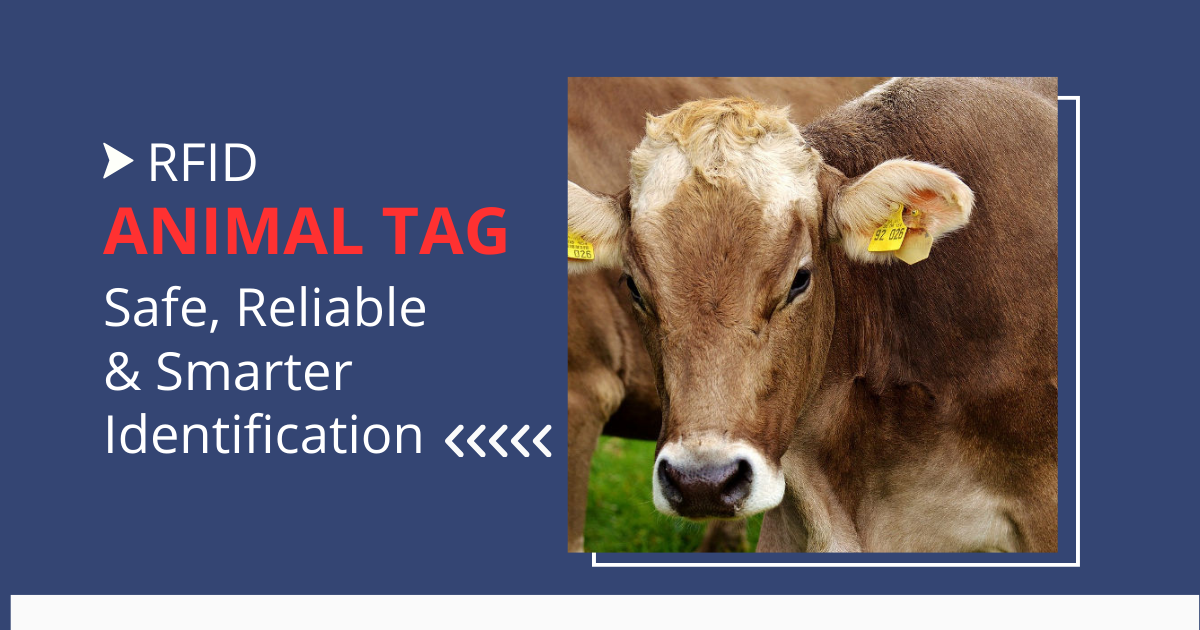
    The answer is yes, completely safe.— RFID ear tags, glass tags, and injectable microchips are completely safe. They are designed using biocompatible, non-toxic materials that do not cause irritation or harm.

    • For cows, sheep, and goats, ear tags are applied quickly and painlessly
    • For dogs and cats, microchips are implanted just beneath the skin, a safe and widely approved method used globally.
    • For zoo animals and wildlife tracking, RFID ensures better monitoring while prioritizing animal well-being.

    At Omniatags, we manufacture ICAR-approved RFID animal tags that meet strict global standards, ensuring both safety and durability.

    Durability is another common concern.

    How Long Do RFID Animal Tags Last?

    On average, RFID animal tags last 10–20 years, which means they cover the full lifespan of most livestock and pets. This makes them a cost-effective, one-time investment that reduces the need for frequent replacements.

    Applications of RFID Animal Labels

    🐄 Livestock Management (Cows, Sheep, Goats)

    • Monitor milk yield and health conditions.
    • Track movement and prevent disease spread.
    • Improve breeding programs with accurate data.

    🐕 Pet Identification (Dogs, Cats)

    • Microchips ensure lost pets can be quickly reunited with owners.
    • Permanent identification system trusted by veterinarians worldwide.

    🦓 Animal Tracking & Zoo Care

    • RFID helps track endangered species.
    • Assists zookeepers in managing medical history and breeding cycles.
    • Provides reliable data for researchers and caretakers.

    Why Choose Omniatags for Animal RFID Tags?

    At Omniatags, we design and manufacture a wide range of RFID ear tags, glass tags, and injectable microchips that are:

    • ✔️ Safe & Non-Toxic – Made from biocompatible materials.
    • ✔️ Durable & Long-Lasting – Up to 20 years of use.
    • ✔️ Globally Approved – ICAR-certified and trusted worldwide.

    Farmers trust us for livestock productivity, veterinarians for medical tracking, zoos for animal care, and pet owners for safety and security.

    Conclusion

    By combining technology with care, RFID animal labels have transformed how we manage livestock, protect pets, and track animals. At Omniatags, we are committed to delivering ICAR-approved, globally trusted animal identification solutions that make management smarter, safer, and more efficient.

    👉 Ready to upgrade your animal management system? Connect with Omniatags today to explore our full range of RFID animal tags and microchips.

  • Choosing the Right RFID Tag: A Complete Buyer’s Guide

    Choosing the Right RFID Tag: A Complete Buyer’s Guide

    In today’s rapidly advancing industries, RFID tags have become an essential part of modern tracking and identification systems. Whether you’re managing livestock, automating warehouse logistics, securing access control points, or monitoring pharmaceutical inventory, selecting the right RFID tag is crucial for performance, reliability, and cost-efficiency.

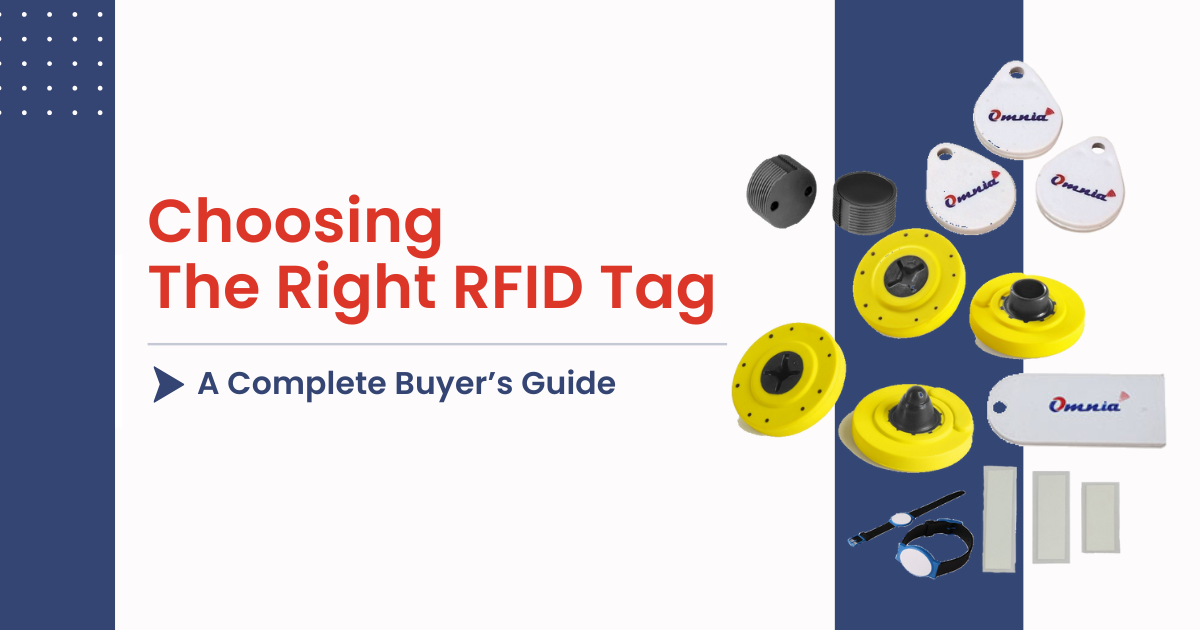
    As a leading RFID tag manufacturer, Omniatags offers a wide range of durable, application-specific RFID tags. This guide will help you understand what to look for when choosing RFID tags based on your industry, environment, and tracking needs.

    1. Understand Your Application Environment

    Before choosing an RFID tag, identify where and how it will be used. Conditions such as exposure to heat, moisture, chemicals, or metal surfaces significantly affect tag performance.

    For example:

    • In Industry & Logistics, RFID tags are often exposed to rugged conditions. You’ll need on-metal RFID tags that are durable and offer long-range readability. Explore our Industry & Logistics RFID Tags.
    • For waste bin tracking, outdoor-rated RFID tags with weatherproof materials are ideal.
    • In Pharma & Healthcare, you need high-precision, tamper-proof RFID tags for medical assets and inventory. See our Pharma & Healthcare RFID Tags.
    • For Access & Security, RFID tags must work seamlessly with gate systems and ID credentials. Browse our Access & Security RFID Tags.


    2. Choose the Right RFID Frequency

    Different RFID tags operate at different frequencies. Here’s a quick breakdown:

    • Low Frequency (LF) – Best for animal tracking. LF tags perform well near liquids and are used in ICAR-approved animal ear tags.
    • High Frequency (HF) – Suitable for access control, ticketing, and some pharma applications.
    • Ultra High Frequency (UHF) – Offers long read ranges and fast data transfer. Perfect for logistics, warehouse automation, and machinery tracking.


    3. Material and Form Factor Matter

    The physical construction of the RFID tag must match the application:

    • Hard tags are durable and ideal for metal machinery, bins, and crates.
    • Flexible or label tags are better for IT equipment, files, and pharmaceutical packaging.
    • Tamper-proof tags are essential for asset security and theft prevention.


    4. Consider the Tag Attachment Method

    Tags can be:

    • Adhesive-backed (for smooth, clean surfaces)
    • Screw-mounted or riveted (for rugged machinery or bins)
    • Ear-tag format (for animal identification)

    Choosing the right attachment method ensures long-term performance in your environment.

    5. Check for Compliance and Certifications

    Especially in animal tracking, government compliance is mandatory. Omniatags manufactures ICAR-approved RFID animal ear tags, ensuring you meet regulatory standards while maintaining traceability.

    6. Customize Tags for Your Unique Needs

    Omniatags offers custom RFID tags with options such as:

    • Laser-engraved serial numbers
    • Embedded logos or QR codes
    • Customized chip types and memory sizes
    • Specific encoding for your tracking systems

    Customization ensures that your RFID tags align with your data management and security protocols.

    7. Work with a Trusted RFID Tag Manufacturer

    Choosing a reliable manufacturer is just as important as choosing the tag. With years of expertise, Omniatags provides:

    • ICAR-approved tags
    • Global supply capacity
    • Custom manufacturing options
    • Expertise across multiple industries includes animal tracking, logistics, security, pharma, and waste management

    Explore all our RFID tag categories on www.omniatags.com.

    Conclusion

    Choosing the right RFID tag requires a deep understanding of your application, environment, and tracking objectives. Whether you need tags for livestock, warehouse equipment, pharma inventory, or access systems, Omniatags has a solution designed to meet your needs.

    Let us help you track smarter — with durable, high-quality RFID tags built for your business.

  • Why does every business need to track their inventory?

    Why does every business need to track their inventory?

    Small business owners of today have considerable advantages over those of only a few decades ago. Technological advances make many business aspects more efficient and offer a number of effective tools. From basic information technology to logistics, marketing, and human resources, there are affordable and efficient ways of performing manual functions and tasks that were previously tedious, including ways of Inventory tracking.

    Inventory tasks include:

    • Planning for seasonal activities for companies shipping large quantities of products
    • Anticipating shortages
    • Anticipating growth in demand from promotions and added marketing success
    • Providing the necessary financial reporting information


    An effective inventory approach will:

    • Achieve maximum discounts on the purchase level
    • Improve negotiating a position with vendors and shipping sources
    • Help meet overall customer expectations and needs
    • Control Working capital investment
    • Minimize the cost of ordering too often and the need for rush delivery
    • Minimize shortage and out-of-stock costs
    • Lower capital costs for excess inventory
    • Reduce losses due to outdated inventories


    Radio frequency identification (RFID) is a technology that creates visibility and helps to control the warehouse inventory.

    Omnia produces RFID tags which are small microchips plus a small aerial that may contain a range of digital information about a specific item. RFID Tags are embedded in plastic, paper or similar material and attached to a product or packaging, a pallet or container, or even a van or truck.  An RFID reader interviews the tag, transmitting and receiving radio signals from and to the tag. Using special computer software the information the reader collects is collected and processed. Readers can be placed in a factory or warehouse at different positions to show when goods are being moved.

    RFID technology helps to identify and record individual products and components and track them from production to point-of-sale throughout the verticals. This process does not require direct line-of-sight and creates inventory visibility in hand, thus helping to make proper use of it. With the help of this technology, each inventory/stock movement can be automatically stored on the system.

    The use of RFID tagging for stock control offers several advantages over other methods such as barcodes:

    • tags can be read remotely, often at a distance of several meters
    • several tags can be read at once, enabling an entire pallet-load of products to be checked simultaneously
    • tags can be given unique identification codes so that individual products can be tracked
    • RFID tags can be overwritten, enabling information about items to be updated, eg when they are moved from one part of a factory to another.

    Over the past few years, the costs associated with RFID tagging have fallen and continue to fall. The benefits of more efficient stock control and enhanced security make it particularly attractive to retailers, wholesalers or distributors stocking a wide range of items, and to manufacturers producing volume runs of products for various customers.

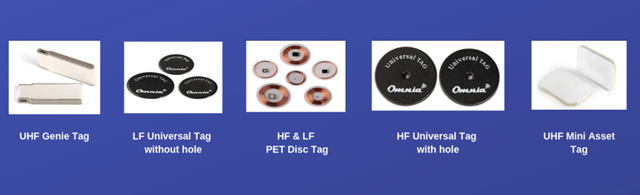
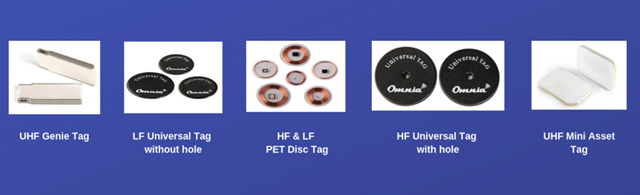
    Suitable Omnia RFID Tags:

    A close-up of several disc discs

AI-generated content may be incorrect.
  • Latest RFID Applications by Omnia Technologies

    Latest RFID Applications by Omnia Technologies

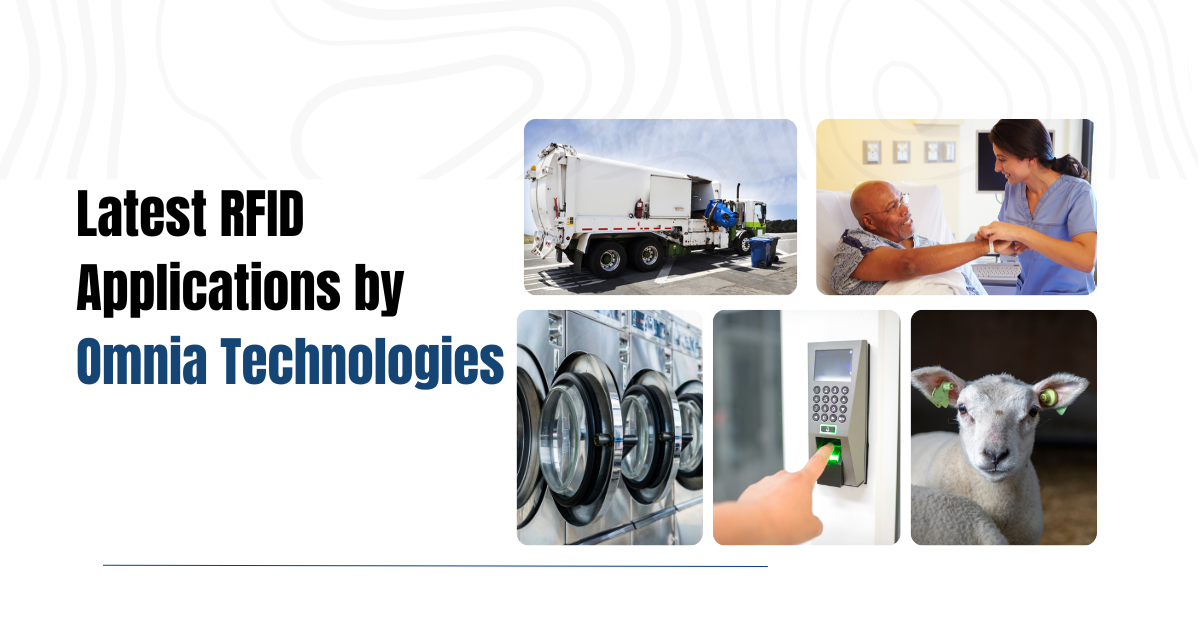
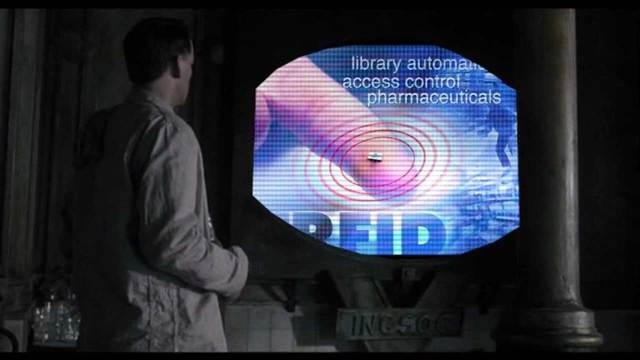
    RFID stands for Radio frequency identification technology. RFID enables wireless data collection by readers from electronic tags attached to or embedded in objects, for any RFID application. RFID systems involve software, network and hardware components that enable information to flow from tags to the organisation’s information infrastructure where it is processed and stored.

    RFID applications focus on tracking and identification of any object or material. Omnia Tags manufacture various type of tag based on RFID application in different frequency ranges- Low Frequency, High Frequency and Ultra High Frequency. RFID applications have been in use for many years in transport, access control, event ticketing and management, and, more recently, in government identity cards and passports, and extensively in manufacturing supply chains and in logistics for goods distribution.

    RFID applications vary from one industry to another industry. One application could require a tag in a wristband form with ultra-high frequency; on other hand one could require a soft tag with low frequency. A single tag can also serve many industries, but it ultimately dependent upon the RFID application it is being used for.

    We manufacture these tags to serve numerous RFID applications as below:


    Asset Management

    RFID based asset management systems help an individual to keep a track of their assets. Asset can include any valuable thing to a company. This system provides a non-contact, non-line of sight method of automatically gathering, inspecting and distributing detailed production information and is capable of reading through metallic and non-metallic objects.

    Asset management is an RFID application which requires hard or soft tags to track and identify assets of a company. Omnia Tags manufactures various ranges of RFID tags used for asset management.

    IT Asset management is one aspect of the above, IT Asset tracking is tracking of the various IT assets of a company like laptop, CPU, monitor, keyboard etc. from the time of their purchase to time of disposal. Asset tracking enables you to identify and track change in the location of assets, increase or decrease the number of assets, track assignment status and user information.

    Laundry Management

    RFID Laundry tags enable companies to track linens, clothing, rags and other assets leading to efficient inventory management. Each laundry tag has a unique identification number which helps track every garment individually, quickly and accurately. Omnia’s laundry tags can be easily patched in garments and linens. They are designed to withstand pressure, heat and chemical exposure.

    Major customers of RFID laundry management are Hospitality industry, Commercial launderers and dry cleaners, and healthcare.

    Access & Security

    Radio Frequency Identification (RFID) Tags are being used for access control and security system for several years. Nowadays, the system of automatic identification has become necessary to overcome the security threats. The RFID based access & security system only allows the authorized person to enter or exit from a certain check point. RFID application for access and security includes- person identification, parking management, access control, library applications, etc.

    We design and manufacture these tags for all the applications for Government, Healthcare, Manufacturing and all other industries. 


    Animal Identification & tracking

    Animals move from one farm to another and their movement cannot be controlled or stored like any other product. The manual process of data entering about the number of animal enters and exit from the farm is time consuming resulting in more possibilities of errors. RFID Technology is largely used now days to track and record animal information, where direct line-of-sight is not practical. Radio tracking technology can help determine exactly where an animal is at any moment in time and often what that animal is doing!

    RFID Tags attached to animals provides basic information about the animals. These tags come in various different sizes and can be incorporated into ear tags. The tags can also be safely injected or embedded in a ceramic bolus and permanently placed into an animal’s stomach.

    Waste Management

    RFID tags to help municipalities and waste management companies optimize their resources and make the data collection process more efficient. Waste management companies and container manufacturers can choose from a broad spectrum of LF, HF and UHF passive contactless transponders that provide various levels of resistance to water, chemicals, shock, and temperature variation.

    Waste disposal trucks equipped with RFID readers pick up waste bins marked with RFID tags. The readers then record the exact time and place for every waste bin that is emptied. Installation of RFID tags on trucks facilitates automatic identification of these trucks at waste disposal sites and feeds waste weight information to an integrated database. These RFID tags enable operators to monitor sorting quality, track the number of times a container is dispatched for collection as well as the weight of its contents. Automatic data collection quickens and simplifies the process of billing for services rendered and allows easy implementation of incentive programs.

    Pharma & Healthcare

    RFID Technology plays a crucial role in the pharma & health-care industry, it includes equipment tracking, people identification and tracking, medical report monitoring, medicine tracking, and supply chain. Pharmaceutical companies and hospitals are becoming main customers for RFID Technology. It makes tracking and identification easier! RFID saves organisations time and money by storing patient information and monitoring their location in hospital. The data collected in real time is immediately available to personnel.

    Inventory Management

    With increasing complexities in the work process, managing inventory has become tough and important too. RFID application of inventory management helps to control inventory, stock security and quality management.

    RFID technology helps in identification and recording of individual products and components, and to track them throughout the verticals from production to point-of-sale. This process does not require direct line-of-sight and it creates a real time visibility of stock in hand, thus helps proper utilisation to it. Every movement of the inventory/stock can be automatically stored on the system with the help of this technology.

    NFC Application

    Near field communication (NFC) is a short-range wireless connection that allows for sharing data between several devices, as well as accessing information and carrying out commercial transactions only by approaching our credit card to a compatible reader.

    Mobile payment is a point of sale (PoS) payment method which is done through smart phones facility which requires near field communication. Mobile payment is not only convenient but safe also. It is done through smart phones, and has reduced the requirement of carrying cash in hand.

    Tracking and identification becomes important for any company when they hold a huge amount of material. RFID applications are majorly about tracking and identification of asset, inventory, waste, vehicles, human, animal, containers, baggage or any material as discussed above.

    Radio frequency identification tags can be applied for tracking and identification of any object. This technology do not require any direct line of sight, it automatically stores all the information of tagged objects. Unlike barcode, Multiple (>100) RFID tags can be read simultaneously. Also, once up and running, the system can be completely automated or requires low human intervention. RFID applications includes- pallet tracking, vehicle tracking, parking management, jewellery management, electronic toll collection, mobile payment, manufacturing & automation, library applications, warehousing & distribution.

  • Benefits of RFID Technology for Business

    Benefits of RFID Technology for Business

    RFID has been described as the “world’s oldest new technology”, whereas the use of Radio Frequency Identification (RFID) technology is growing now! A study shows, RFID technology is at a growth since it is being adopted by more companies each year. It is implemented in various sectors, and used for very different purposes. This is because of benefits derived from using RFID technology; it makes tracking, identification & recording convenient for various industries.

    A person looking at a screen

AI-generated content may be incorrect.

    Benefits of RFID technology for Business:

    Optimum Utilization of Assets

    Asset management is the most common use of RFID technology for any business. Companies tag their asset to track and record the number of assets, and manage them. Most companies do this to store relevant information about the asset through RFID technology. It improves the reliability on assets- a manager can monitor maintenance cycles, analyse costs, and review asset availability. Examples include tagged machines where the maintenance history and all information are stored on the tag. Every company needs to keep track of its assets. Asset management through RFID technology helps businesses to streamline their operations. Keeping a track of assets gives a clear picture of the company, and helps in reducing cost and optimum utilization.

    Visibility in flow of Items

    RFID technology creates a visibility in operations and reduces manual inventory management process. By creating visibility in flow of items business can cut down extra cost and improve work flow. RFID tags are attached to an item which moves along the supply chain. These tags have a unique identification number with all the information stored on its IC. As the item move along supply chain it is not required to manually track it. For example- Among retailers, the benefit of RFID is its potential to create visibility and reduce manual interference, thus an error free process. Retailers could track the tagged products as they move along the distribution tiers (from manufacturer to store shelves).
    The main benefit of RFID is visibility!

    Inventory Audit / Management

    RFID inventory tracking application solves challenges faced by businesses related to inventory. Manual inventory tracking is a time consuming process also includes higher chances of error. RFID technology helps to overcome this problem by allowing businesses to automatically track and manage data. Inventory is usually traced by business to optimize the stock level; helps in maximizing availability of items according to upcoming requirement, reducing unnecessary inventory and reducing carrying cost.

    RFID based Inventory tracking solves these challenges by providing businesses with the means to track the location at item, crate, pallet or conveyor level and to maintain count of inventory at all stages of the supply chain.
    For example- For warehousing and distribution, RFID based inventory tracking lowers the cost of verifying contents, locations and availability of needed goods.

    Identification of human or object

    An RFID tag containing additional identification/authorization information, scanned by a reader tied to a secure access data base, greatly improves security. Human safety is also enabled by RFID. In hospitals, it’s of course critical to ensure that the correct medicine or procedure is given to the correct patient. Unfortunately, even with the ubiquitous wristband identification, mistakes are made. For authentication purposes, RFID is used to provide secure identification mechanisms for persons and objects. Prominent examples of personal authentication are company entry badges, transportation system cards, electronic passports and identity cards.

    Automatically recording and managing Information

    RFID tags are also beneficial to businesses which require more than one person to perform the same task. This process where many people are involved in performing a particular task may result in inefficiency in overall process. The manual process of recording information for the task performed by each person or, every time a particular asset/document is touched might not be recorded. RFID overcomes this limitation by allowing businesses to record the data on tags and read every time before performing.
    For example- Hospitals involve many people, drugs, locations and related documents involved at various points in overall treatment process of a patient. RFID tags can be used to update the patient’s history and intended treatments with every step in the process to greatly simplify the process. This could reduce chance of any error, thus increasing productivity.

    NFC based payment

    Mobile Payment is a point of sale (PoS) payment method which is done through smart phones. The mobile payment facility has reduced the requirement of carrying cash in hand. Mobile payment is not only convenient but safe also. It requires a technology called Near Field Communication (NFC), which is an extension of Radio frequency identification (RFID) technology that combines the interface of a smart card and a reader into a single device. This allows two-way communications between endpoints, where earlier systems were one-way. For two devices to communicate using NFC one device must have an NFC reader/writer and one must have an NFC tag.One of the most popular uses of RFID today is to pay for road tolls without stopping. These active systems have caught on in many countries, and quick service restaurants are experimenting with using the same active RFID tags to pay for meals at drive-through windows. RFID is also catching on as a convenient way to pay for bus, subway and train rides. RFID technology is used for payment systems to secure transactions. Safety requirements for tags are very high. The systems are further characterized by very low read ranges to avoid mixing different payment cards.

    Thus, RFID serves following benefits to business:

    It reduces labor costs.

    RFID also improves visibility of inventory by providing real-time updates and faster scanning.

    RFID tags can hold large amount and different types of data, and that data can be read even in remote locations without a connection to the back-end database.

    Durability also increases with RFID tags, it is made for harsh, it more robust and durable in outdoor environment.

  • RFID V/S NFC

    RFID V/S NFC

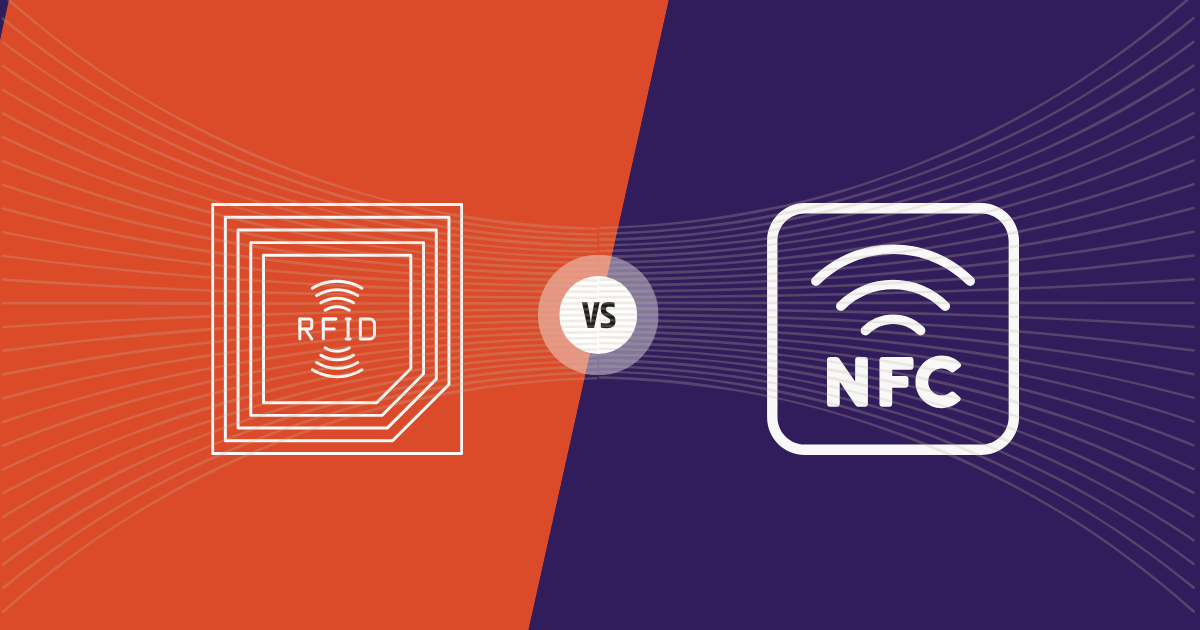
     NFC technology emerged from RFID technology, but in comparison with RFID, there are some differences.

    So, what is the difference between them? We will guide you in understanding what NFC technology is, what the RFID technology is, and how they differ.

    What is RFID?

    Radio Frequency Identification (RFID) is an automatic identification technology that is non-contact. It automatically identifies target items and by means of radio frequency signals acquires appropriate information.

    It can operate without manual interference in different hostile settings. RFID technology can simultaneously recognize high-speed moving items and various tags that can be operated quickly and conveniently.

    A black background with white text

AI-generated content may be incorrect.

    What is NFC?

    NFC Technology is derived from the “contactless radio frequency identification” (RFID) and interconnection technology between wireless devices, just like RFID. NFC information is also transmitted by electromagnetic induction coupling in the radio frequency part of the spectrum, but there is still a big difference between the two.

    First of all, NFC is a wireless connection technology that provides easy, secure and fast communication. Its transmission range is smaller than that of RFID.

    Secondly, NFC is compatible with the existing contactless smart card technology and has become a formal standard supported by more and more major manufacturers.

    Thirdly, NFC is also a close-range connection protocol, which provides easy, safe, fast and automatic communication between various devices.

    Compared with other connection modes in the wireless world, NFC is a close private communication mode.

    The difference between NFC and RFID Technology:

    1. Distance: The working distance of NFC is  0-10. Because RFID has different frequencies, it’s working distance varies from several centimeters to tens of meters. 

    2. Frequency: The working frequency of NFC is 13.56MHz, while the working frequency of RFID is low frequency, high frequency (13.56 MHz) and ultra-high frequency.

    3. Working mode: NFC supports both read-write mode and card mode. In RFID, card reader and contactless cards are two independent entities, which can not be switched.

    4. Application areas: RFID is more used in production, logistics, tracking, and asset management, while NFC works in access control, bus card, mobile payment, and other fields.

    Latest RFID Applications by Omnia Technologies

    RFID stands for Radio frequency identification technology. RFID enables wireless data collection by readers from electronic tags attached to or embedded in objects, for any RFID application. RFID systems involve software, network and hardware components that enable information to flow from tags to the organisation’s information infrastructure where it is processed and stored.

    RFID applications focus on tracking and identification of any object or material. Omnia Tags manufacture various type of tag based on RFID application in different frequency ranges- Low Frequency, High Frequency and Ultra High Frequency. RFID applications have been in use for many years in transport, access control, event ticketing and management, and, more recently, in government identity cards and passports, and extensively in manufacturing supply chains and in logistics for goods distribution.

    RFID applications vary from one industry to another industry. One application could require a tag in a wristband form with ultra-high frequency; on other hand one could require a soft tag with low frequency. A single tag can also serve many industries, but it ultimately dependent upon the RFID application it is being used for.

    We manufacture these tags to serve numerous RFID applications as below:

    A hand holding a device

AI-generated content may be incorrect.

    Asset Management

    RFID based asset management system helps an individual to keep a track of their assets. Asset can include any valuable thing to a company. This system provide a non-contact, non-line of sight method of automatically gathering, inspecting and distributing detailed production information and are capable of reading through metallic and non-metallic objects.

    Asset management is an RFID application which requires hard or soft tags to track and identify assets of a company. Omnia Tags manufactures various range to RFID tags used for asset management.

    IT Asset management is one aspect of the above, IT Asset tracking is tracking of the various IT asset of a company like laptop, CPU, monitor, keyboard etc. from the time of their purchase to time of disposal. Asset tracking enable you to identify and track change in the location of assets, increase or decrease the number of assets, track assignment status and user information.

    Laundry Management

    RFID Laundry tags enable companies to track linens, clothing, rags and other assets leading to efficient inventory management. Each laundry tag has a unique identification number which helps track every garment individually, quickly and accurately. Omnia’s laundry tags can be easily patched in garments and linens. They are designed to withstand pressure, heat and chemical exposure.

    Major customers of RFID laundry management are Hospitality industry, Commercial launderers and dry cleaners, and healthcare.

    Access & Security

    Radio Frequency Identification (RFID) Tags are being used for access control and security system for several years. Nowadays, the system of automatic identification has become necessary to overcome the security threats. The RFID based access & security system only allows the authorized person to enter or exit from a certain check point. RFID application for access and security includes- person identification, parking management, access control, library applications, etc.

    We design and manufacture these tags for all the applications for Government, Healthcare, Manufacturing and all other industries. 

    Animal Identification & tracking

    Animals move from one farm to another and their movement cannot be controlled or stored like any other product. The manual process of data entering about the number of animal enters and exit from the farm is time consuming resulting in more possibilities of errors. RFID Technology is largely used now days to track and record animal information, where direct line-of-sight is not practical. Radio tracking technology can help determine exactly where an animal is at any moment in time and often what that animal is doing!

    RFID Tags attached to animals provides basic information about the animals. These tags come in various different sizes and can be incorporated into ear tags. The tags can also be safely injected or embedded in a ceramic bolus and permanently placed into an animal’s stomach.

    Waste Management

    RFID tags to help municipalities and waste management companies optimize their resources and make the data collection process more efficient. Waste management companies and container manufacturers can choose from a broad spectrum of LF, HF and UHF passive contactless transponders that provide various levels of resistance to water, chemicals, shock, and temperature variation.

    Waste disposal trucks equipped with RFID readers pick up waste bins marked with RFID tags. The readers then record the exact time and place for every waste bin that is emptied. Installation of RFID tags on trucks facilitates automatic identification of these trucks at waste disposal sites and feeds waste weight information to an integrated database. These RFID tags enable operators to monitor sorting quality, track the number of times a container is dispatched for collection as well as the weight of its contents. Automatic data collection quickens and simplifies the process of billing for services rendered and allows easy implementation of incentive programs.

    Pharma & Healthcare

    RFID Technology plays a crucial role in pharma & health-care industry, it includes equipment tracking, people identification and tracking, medical report monitoring, medicine tracking, and supply chain. Pharmaceutical companies and hospitals are becoming main customers for RFID Technology. It makes tracking and identification easier! RFID saves organisations time and money by storing patient information and monitoring their location in hospital. The data collected in real time is immediately available to personnel.

    Inventory Management

    With increasing complexities in the work process, managing inventory has become tough and important too. RFID application of inventory management helps to control inventory, stock security and quality management.

    RFID technology helps in identification and recording of individual products and components, and to track them throughout the verticals from production to point-of-sale. This process does not require direct line-of-sight and it creates a real time visibility of stock in hand, thus helps proper utilisation to it. Every movement of the inventory/stock can be automatically stored on the system with the help of this technology.

    NFC Application

    Near field communication (NFC) is a short-range wireless connection that allows for sharing data between several devices, as well as accessing information and carrying out commercial transactions only by approaching our credit card to a compatible reader.

    Mobile payment is a point of sale (PoS) payment method which is done through smart phones facility which requires near field communication. Mobile payment is not only convenient but safe also. It is done through smart phones, and has reduced the requirement of carrying cash in hand.

    Tracking and identification becomes important for any company when they hold a huge amount of material. RFID applications are majorly about tracking and identification of asset, inventory, waste, vehicles, human, animal, containers, baggage or any material as discussed above.

    Radio frequency identification tags can be applied for tracking and identification of any object. This technology do not require any direct line of sight, it automatically stores all the information of tagged objects. Unlike barcode, Multiple (>100) RFID tags can be read simultaneously. Also, once up and running, the system can be completely automated or requires low human intervention. RFID applications includes- pallet tracking, vehicle tracking, parking management, jewellery management, electronic toll collection, mobile payment, manufacturing & automation, library applications, warehousing & distribution.

  • RFID V/S Barcode

    RFID V/S Barcode

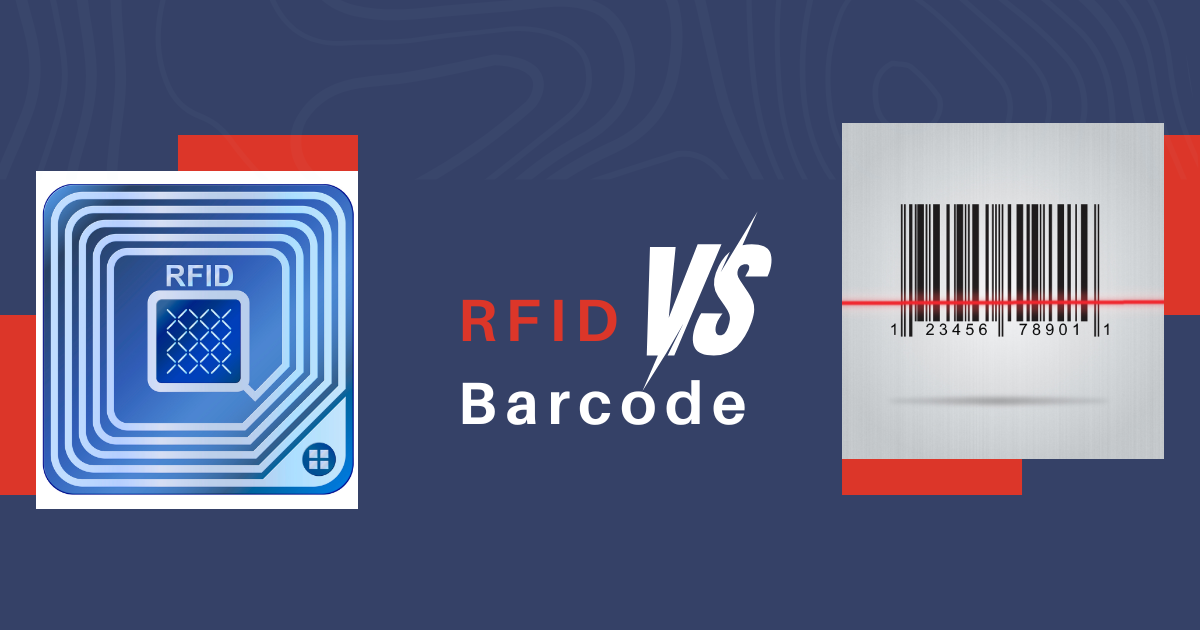
    Advantages of using RFID Technology over Barcode?

    Radio Frequency Identification (RFID) is a wireless communication technology that can define particular objectives and read and write associated information via radio signals without creating mechanical or optical contact between identification scheme and particular objectives. Radio signals are transmitted from RFID tags attached to objects by electromagnetic fields tuned to radio frequencies to automatically identify and track the objects.

    Barcode technology is the abbreviation of barcode auto-identification technology. It is an automatic technology for the recognition of symbols based on modern IT. It can incorporate symbol coding features, data acquisition, automatic identification, information input, and storage. It can efficiently fix the issues of big amounts of at acquisition and automatic input in the logistics system.

    The advantages of RFID technology over barcode technology:

    1. RFID tags are more secure:

    Because RFID carries electronic information, it’s data content can be protected by encryption technology, so that its content is not easy to be forged and altered, while barcode is exposed to physical information, and the use of common coding rules, data security can not be guaranteed.

    2. Higher efficiency of RFID:

    The recognition frequency of barcode scanning is limited, only one barcode can be scanned at a time, and the RFID reader can identify and read several RFID tags at the same time.

    3. The storage capacity of RFID tag Data:

    The capacity of the one-dimensional barcode is 50 bytes, the maximum capacity of the two-dimensional barcode can store 2 to 3000 characters, and the maximum capacity of RFID is several megabytes. With the development of memory carriers, data capacity is also expanding. In the future, the amount of data needed to be carried by articles will be increasing, and the demand for expanding the capacity of storage media will increase accordingly.

    4. Anti- Pollution ability and durability of RFID tags:

    Traditional barcode carriers are paper, so it is vulnerable to pollution, but RFID has a strong resistance to water, oil, and chemicals. In addition, because the bar code is attached to plastic bags or cartons, it is particularly vulnerable to damage; the RFID label is the data stored in the chip, so it can be free from contamination and prolong service life.

    5. The external forms of RFID tags are various:

    RFID is not limited by size and shape in reading. It does not need to solve the size or printing accuracy of the carrier in order to read accurately. In addition, RFID tags can be used in different products with the development of miniaturization and diversification.

    6. RFID Technology can be re-used:

    Traditional barcode carriers are paper, so it is vulnerable to pollution, but RFID has a strong resistance to water, oil, and chemicals. In addition, because the bar code is attached to plastic bags or cartons, it is particularly vulnerable to damage; the RFID label is the data stored in the chip, so it can be free from contamination and prolong service life.

    7. RFID is more penetrating and accessible:

    In the case of coverage, RFID can penetrate non-metallic or non-transparent materials such as paper, wood, and plastics, and can carry out penetrating communication. The barcode scanner can recognize the barcode only at close range and without object obstruction.

    If you want to know more about RFID Technology and Tags, feel free to contact us.